The Bull
Zodiac ConstellationOlympusGreek mythology · Divine power · Second sign of the Zodiac
Zeus, the White Bull & Europa
The most famous myth linking the bull to the gods is that of Zeus and Europa. Enamored of the Phoenician princess, Zeus transforms into a white bull of unreal beauty — alabaster coat, crescent-moon horns, breath scented with crocus. He mingles with Europa's father's herd, tames the young woman with his apparent gentleness, then abducts her and crosses the sea to Crete.
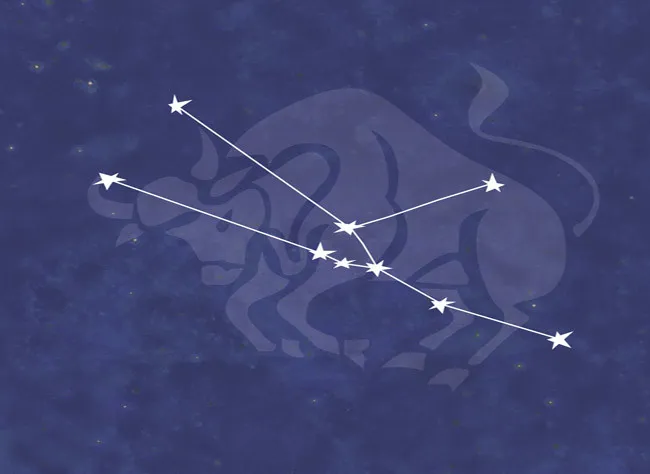
From their union are born three illustrious sons: Minos, future king of Crete and judge of the Underworld, Rhadamanthus and Sarpedon. Zeus, in memory of this metamorphosis, places the bull among the stars — giving birth to the constellation of Taurus.
Poseidon, Pasiphae & the Minotaur
The bull is also at the heart of a darker Cretan myth. Minos, having become king of Crete, asks Poseidon for a sign of divine legitimacy. The god conjures from the waves a white bull of absolute magnificence, charging Minos to sacrifice it. But Minos, dazzled, substitutes an ordinary beast. Poseidon avenges himself by afflicting Queen Pasiphae with a monstrous passion for the animal.
Daedalus builds her a hollow wooden cow, and from this unnatural union is born the Minotaur — Asterion — a creature with a human body and bull's head. Minos has it imprisoned in the labyrinth designed by Daedalus, and offers it yearly tribute from Athens: seven youths and seven maidens. It was Theseus who ended the cycle by slaying the monster.
The Seventh Labor of Heracles
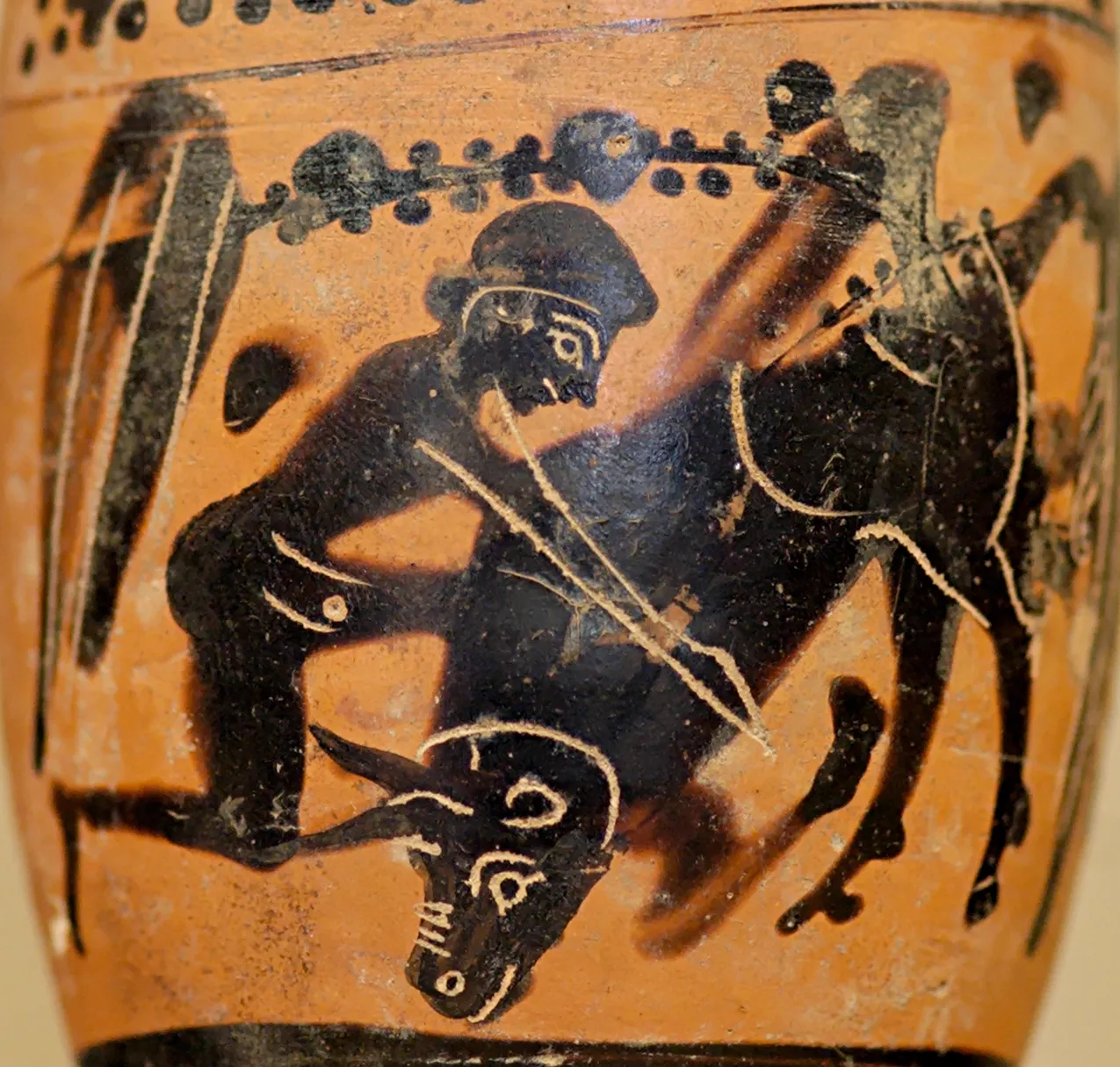
The same white bull of Poseidon reappears in the Labors of Heracles. The seventh labor commands him to capture the rampaging bull ravaging Crete. Heracles subdues it barehanded, delivers it to Eurystheus, then releases it. The animal makes its way to Attica where it becomes the Marathon Bull, later captured by Theseus.
The star Aldebaran — "the follower of the Pleiades" in Arabic — is the brightest star of the constellation, of a characteristic reddish-orange color. Beside it, the Pleiades form the bull's back: seven sisters transformed into stars by Zeus to save them from Orion's pursuit.
In Saint Seiya
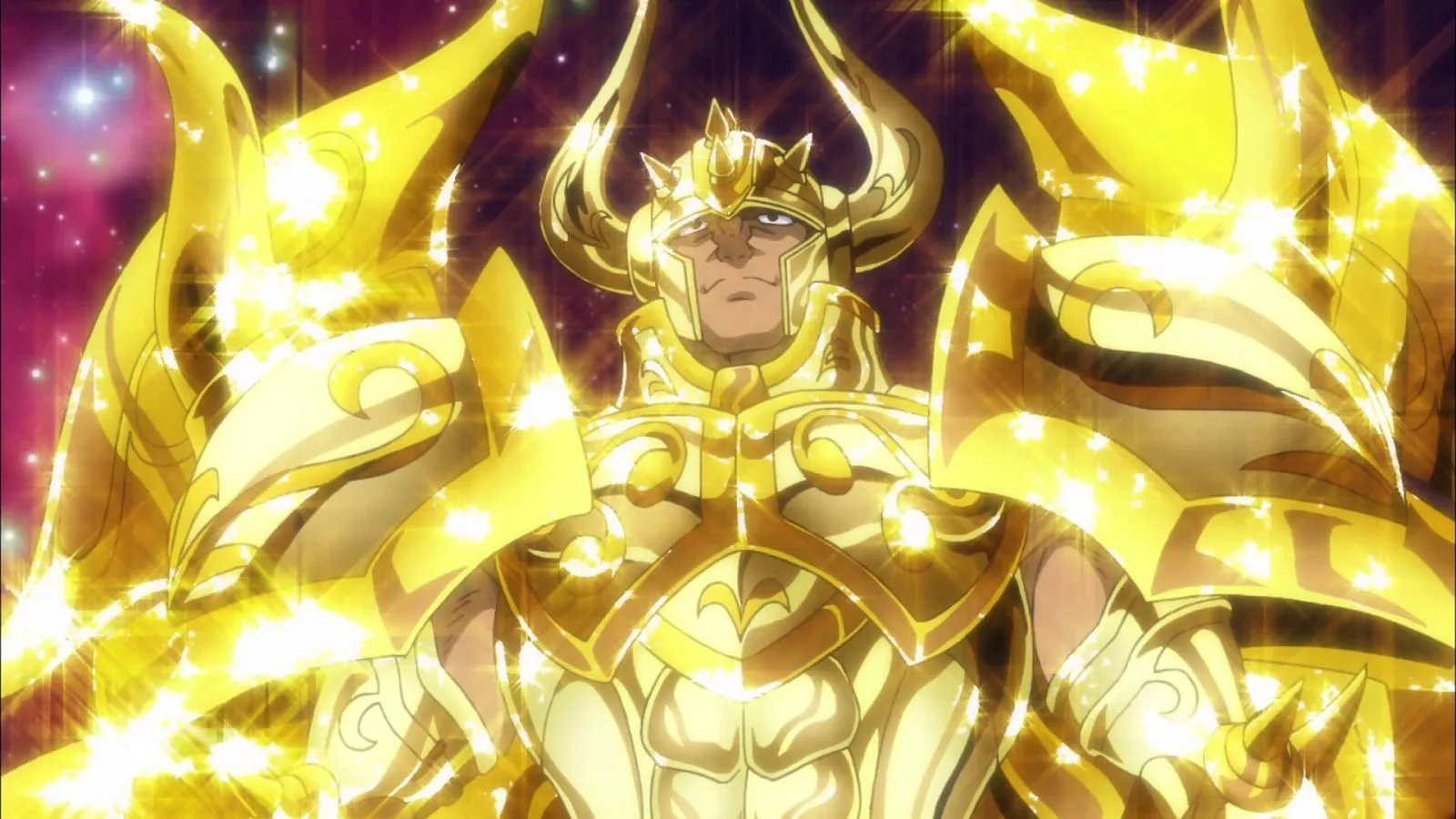
Gold Knight of TaurusKurumada names his Gold Knight of Taurus after Aldebaran — the brightest star of the constellation, the "red eye of the bull." This choice is deliberate: Aldebaran is a red giant, a colossal star whose size directly evokes the character's extraordinary stature, the most massive of all the Gold Knights.
The link with the myth runs deep. Just as the white bull embodies raw but loyal force — when not thwarted by human ingratitude — Aldebaran is an inflexible but just guardian. His technique, the Great Horn, evokes the deadly horns of the mythological bull, the natural weapon that overturns everything in its path.
The constellation of Taurus also marks the second House of the Sanctuary, one of quiet but absolute power — like Zeus himself when he assumes the form of the bull, deceptive gentleness concealing an all-powerful divinity.
Attributes
Creatures & Heroes