Pegasus
Winged HorseGreek MythologyGreek mythology · Born from Medusa's blood · Mount of the Gods
Birth — From Medusa's Blood
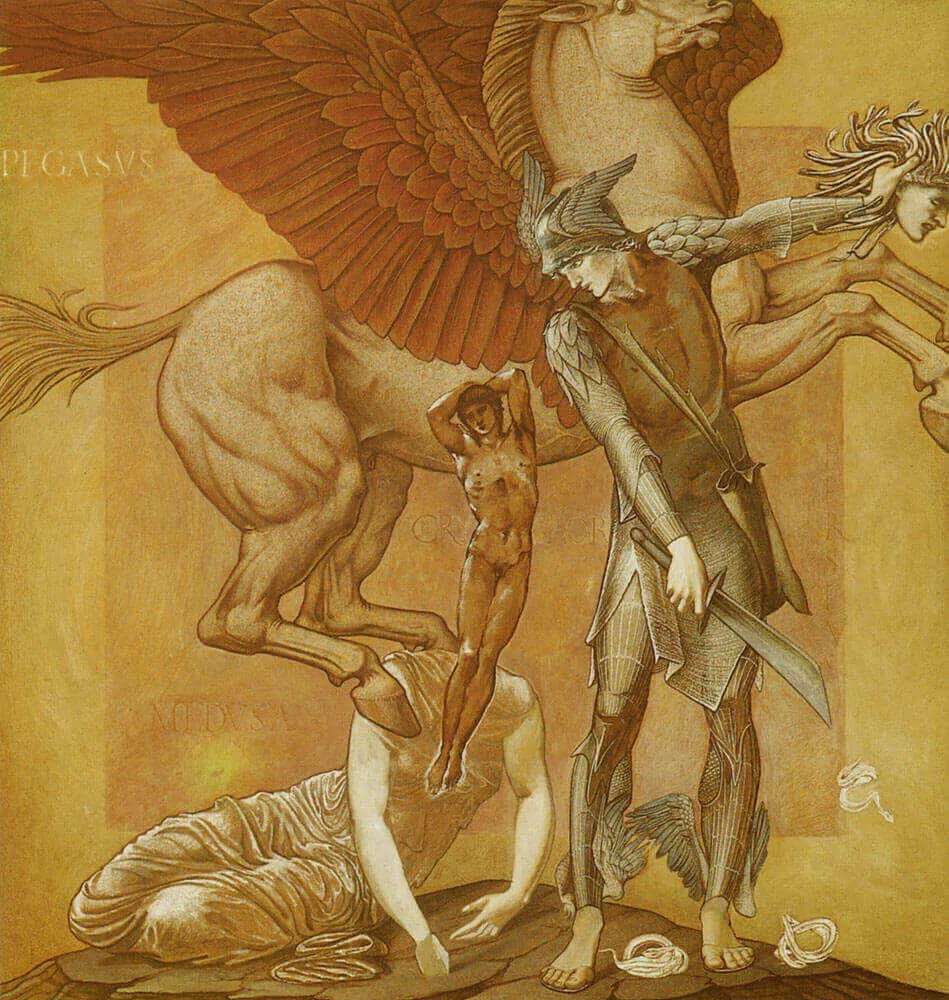
Pegasus is born in a moment of blended violence and beauty. When Perseus severs the head of the Gorgon Medusa, two beings spring from her blood spilled over the sea foam: the giant Chrysaor and the winged horse Pegasus. Son of Poseidon and Medusa, he is born from both death and the divine.
On Olympus, Zeus entrusts him with the sacred task of carrying lightning and thunder to the king of the gods. Pegasus is solitary, wary of mortals, and lives apart from all tumult — a symbol of absolute freedom, inaccessible to those who do not deserve to ride him.
Bellerophon — The Hero & the Chimera
Bellerophon, son of Glaucus or perhaps Poseidon himself, dreams of riding Pegasus. On the advice of the seer Polyidos, he spends a night in Athena's temple and finds at dawn a golden bridle gifted by the goddess. He finds Pegasus drinking from the Pirene fountain, bridles him and takes flight.
Together they are invincible. Bellerophon defeats the Chimera — a monster with a lion's head, a goat's body and a serpent's tail — by riddling its flame-spewing maw with arrows from the air, out of reach. He then defeats the Amazons and the Solymi, all the enemies that King Iobates sends against him.
But hubris condemns him: he attempts to reach Olympus on Pegasus's back. Zeus sends a gadfly to sting the horse; Pegasus rears and Bellerophon falls, broken, blind, wandering alone until his death. Pegasus continues his flight and joins the divine stables.
The Constellation
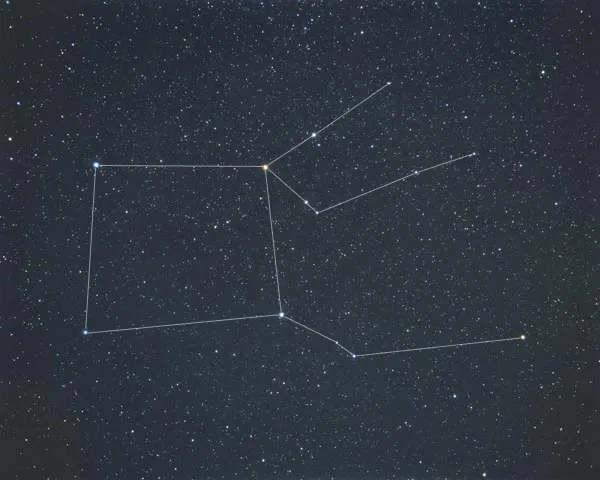
The Pegasus constellation is the seventh largest in the sky. Located in the northern hemisphere, north of Andromeda, southeast of Pisces and south of Aquarius. Its main asterism, the Square of Pegasus formed by four bright stars, is one of the most visible landmarks of the autumn sky.
In ancient poetic tradition, Pegasus embodies creative inspiration — the Hippocrene fountain, source of the Muses, sprang up where his hoof struck the rock of Mount Helicon. The winged horse is thus the messenger between the mortal world and that of the gods, between the real and the ideal.
In Saint Seiya
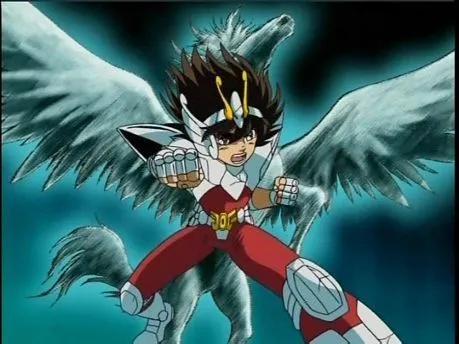
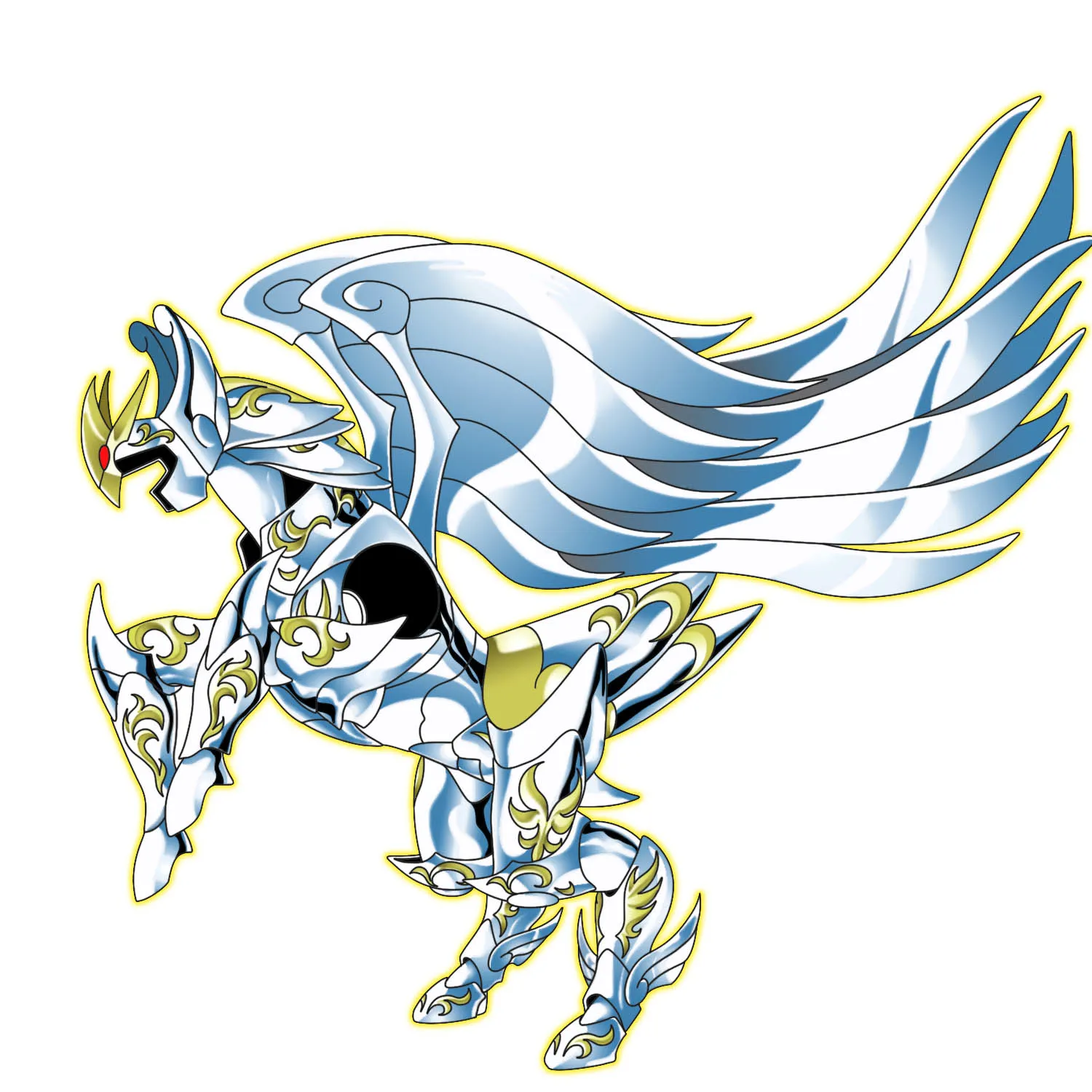
ProtagonistSeiya of Pegasus is the central hero of the series. Just as Pegasus is born from a moment of violence before rising toward the light, Seiya is a rejected child, sent to the ends of the earth to train under extreme conditions — and who returns transformed, bearing the series' most iconic armor.
His attack, Ryūsei Ken — the Pegasus Meteor Fist — unleashes a rain of fists at near-light speed, a direct image of a winged horse charging through the starry sky. Just as Pegasus carries Zeus's lightning, Seiya carries Athena's cosmos — a divine force channeled through a mortal.
The parallel with Bellerophon is also present: Seiya, like the Thracian hero, faces obstacles deemed insurmountable and refuses to submit to a fate imposed on him. But unlike Bellerophon, his aspiration toward the gods is not pride — it is devotion.
Attributes