Icarus
HeroGreek mythologyGreek mythology · Son of Daedalus · The Flight & the Fall
Daedalus & the Labyrinth of Crete
Icarus is the son of Daedalus, the greatest engineer and architect in Greek mythology, and a slave of the Cretan king Minos. Daedalus, banished from Athens after killing his apprentice Talos out of jealousy, entered the service of Minos at Knossos. The king had an urgent problem: his wife Pasiphae, under a curse from Poseidon, had united with a sacred white bull, and the monstrous fruit of this union — the Minotaur, half-man half-bull — had to be hidden.
Daedalus built the Labyrinth of Knossos — a maze of such complexity that whoever entered could not exit. The Minotaur was imprisoned there, fed with young Athenians delivered as tribute. When Daedalus helped Princess Ariadne give Theseus the thread that would allow him to find his way out, Minos, furious at the betrayal, imprisoned Daedalus and his son Icarus in the very Labyrinth the former had built.
Wax Wings — The Flight & the Fall
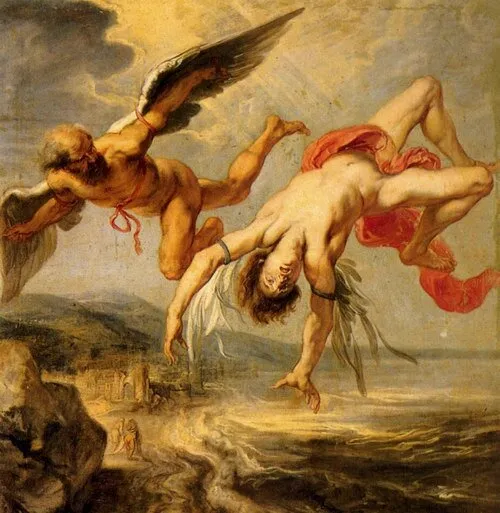
Neither Minos nor his armies could master the sea or the sky. Daedalus, a matchless genius, devised a bold plan: to make wings for himself and his son. He collected bird feathers, assembled them with linen and wax, forming two pairs of functional wings. Before the flight, he carefully instructed Icarus: "Fly at mid-height — not too low, the sea's moisture will weigh down the feathers; not too high, the sun's heat will melt the wax."
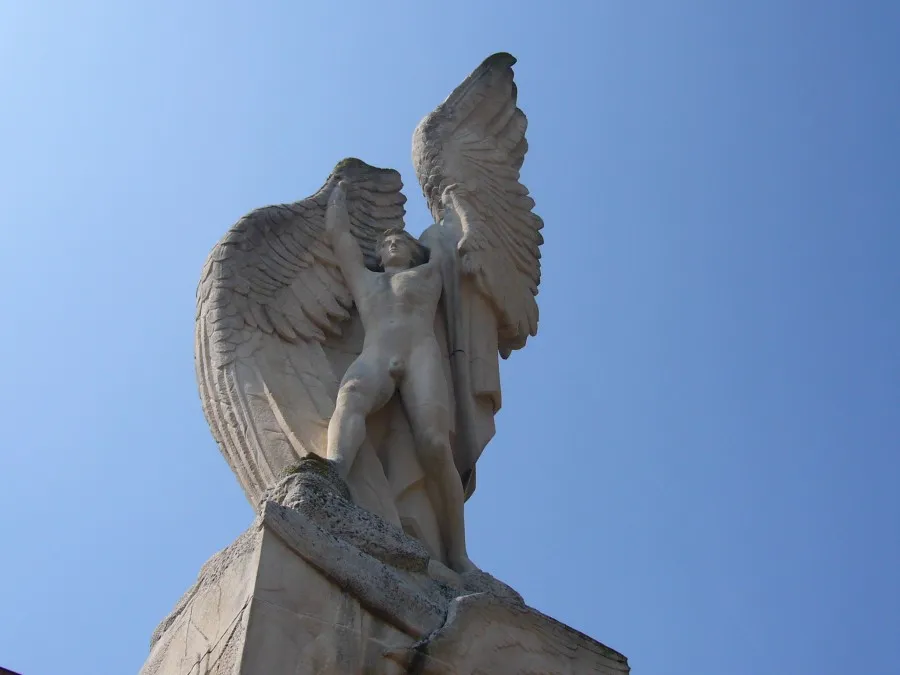
They flew from the Labyrinth, free. But Icarus, exhilarated by the sensation of flight, climbed higher and higher, ever closer to the Sun. The wax melted. The feathers detached one by one. Icarus fell into the sea that has borne his name ever since — the Icarian Sea — and drowned. Daedalus arrived alone in Sicily, mourning the son he could not save from his own recklessness.
The Symbol of Hubris
The myth of Icarus is one of the most powerful metaphors in Western culture. It embodies hubris — the excessive pride of defying the limits imposed by the gods or nature. Icarus is not condemned for wanting to fly: he is condemned for ignoring measure, the golden mean the Greeks called sophrosyne.
But the myth is also a celebration. Icarus was the first being to fly freely in the sky. His fall is tragic, but his flight was real. For centuries, he has symbolized the courage of aspiration — art, exploration, the conquest of the air — as much as the dangers of excess. We often remember only the fall; we forget the freedom of the flight.
In Saint Seiya
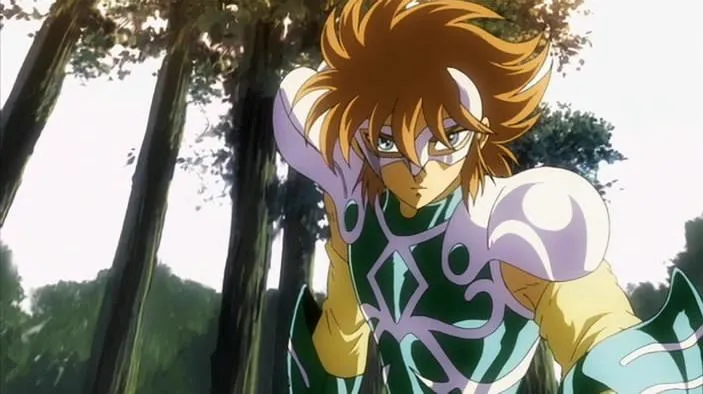
Miscellaneous SaintIn the Saint Seiya universe, the character named Icarus carries the myth's legacy in his profile: a warrior whose strength and ambitions sometimes exceed caution, driven by an intensity that recalls the flight of Daedalus's son. The names Kurumada chooses are never random — Icarus embodies the burning will to go further than fate has planned.
The theme of flight as both freedom and danger is at the heart of many battles in Saint Seiya: the most powerful cosmos are often those that burn fastest, like wax wings too close to the sun. The tension between absolute aspiration and mortal limits is the very engine of the series.
Attributes
The Lesson of the Myth