Poseidon
God of the SeaOlympusGreek mythology · Olympian deity · Oceans, Earthquakes & Horses
Origins & Power over the Seas
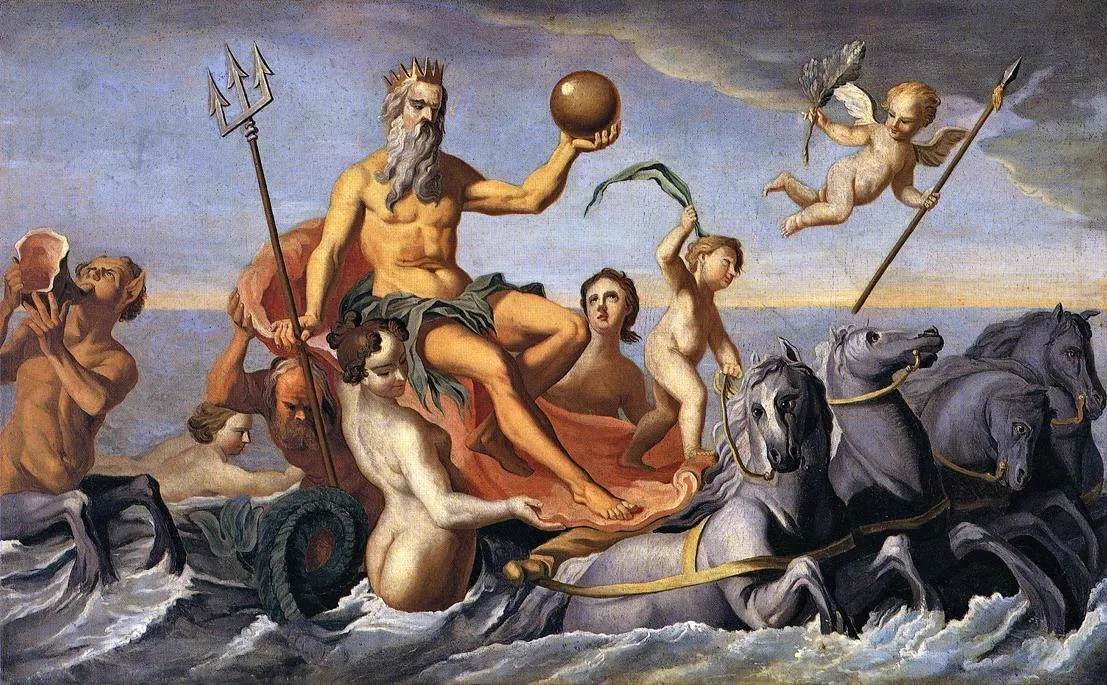
Poseidon is the son of Cronus and Rhea. Like his brothers and sisters — except Zeus — he was swallowed at birth by his father, who feared being dethroned. Freed through Zeus's stratagem, Poseidon took part in the war against the Titans. After their victory, the lot-drawing of the world assigned him the vast domain of seas and oceans — the most powerful and unpredictable element. Since then, he reigns from his underwater palace with bronze gates, in the depths of the abyss, surrounded by Nereids and sea-horses.
His main attribute is the trident — a weapon forged by the Cyclopes — with which he can raise storms, shake the earth, summon islands or engulf entire fleets. He is also called the Earth-Shaker: his rages manifest as earthquakes that fracture the ground and devour cities. His power is raw, primal, linked to the most ancient forces of nature.
Loves & Legendary Lineage
Poseidon married Amphitrite, a Nereid and queen of the seas, after a long pursuit — she had first fled his advances and taken refuge with the Titan Atlantides. A dolphin sent by the god found her and convinced her to accept his courtship. In gratitude, Poseidon immortalized the dolphin by placing it among the constellations. From this union were born Triton — a half-god with a fish's tail — and several Nereids.
His extramarital love affairs are numerous and often dramatic. His liaison with Medusa in a temple dedicated to Athena unleashed the goddess's fury, who transformed the beautiful mortal into a monstrous Gorgon. From this union, when Perseus beheaded Medusa, sprang Pegasus — the winged horse — and Chrysaor, the golden warrior.
Divine Wrath & Epic Conflicts
Poseidon's anger against Odysseus is one of the most famous in mythology. By blinding Polyphemus, the Cyclops son of Poseidon, Odysseus triggered the sea-god's vengeance, who hounded the hero for ten years. Storms, shipwrecks, endless detours — Poseidon transformed Odysseus's return to Ithaca into an exhausting odyssey.
His most symbolic conflict is his dispute with Athena for the patronage of Athens. Poseidon struck the rock of the Acropolis with his trident: a spring gushed forth, but it was saltwater — useless for humans. Athena planted an olive branch: the tree immediately bore fruit. The gods chose Athena's olive. Poseidon, furious, flooded the entire plain of Attica.
In Saint Seiya
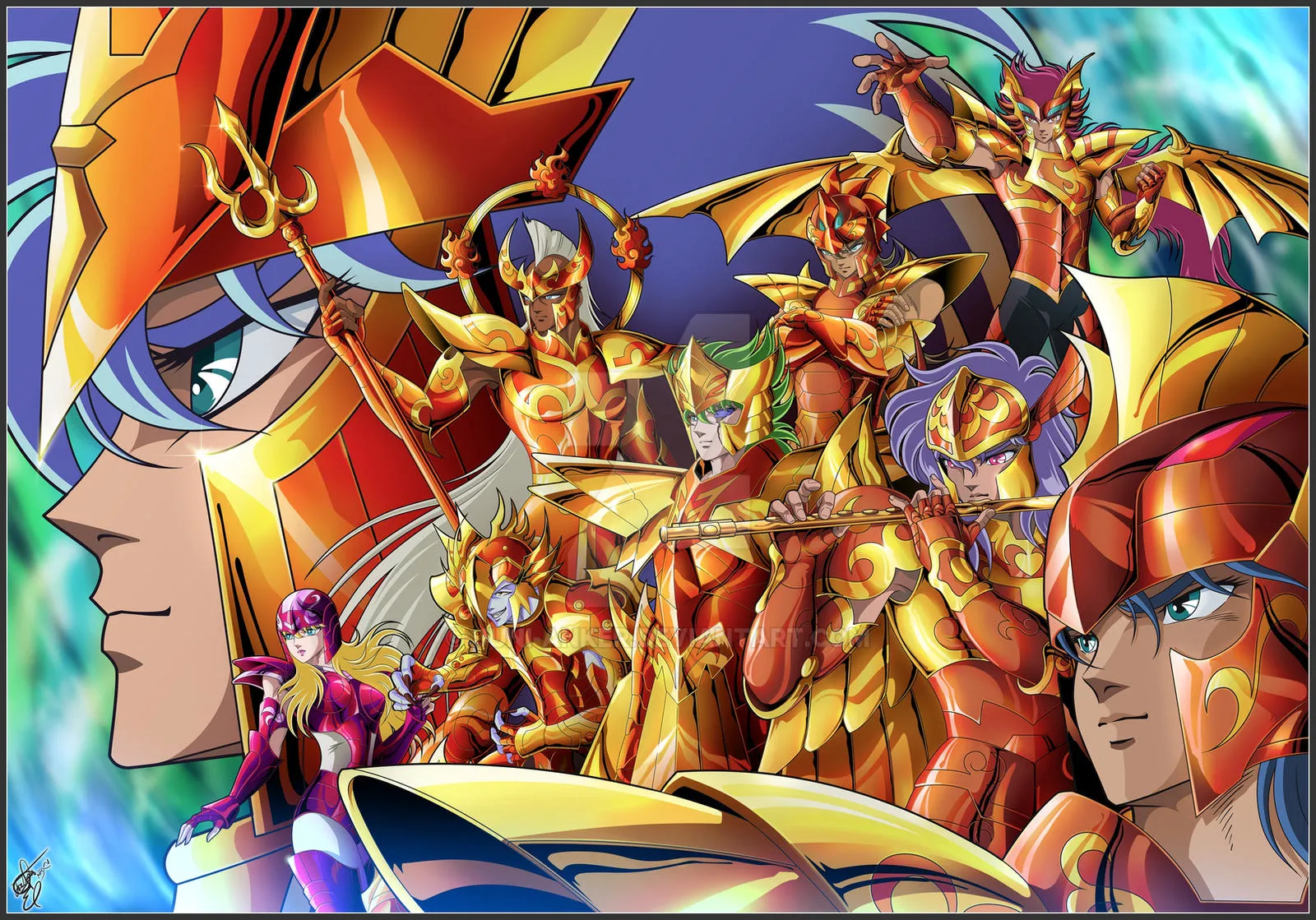
Poseidon SagaIn Saint Seiya, Poseidon reincarnates in the body of Julian Solo, a young American billionaire, to launch his project to flood the Earth and purify it of all human life — reviving the ancient myth of Poseidon flooding lands to satisfy his vengeance. His generals, the Mariners, bear the names of marine deities from Greek mythology.
The confrontation between Poseidon and the Knights in the underwater columns reflects the god's sovereign power over his element. The resolution of the conflict — breaking the seal of the amphora imprisoning Poseidon's soul — conveys the mythological theme of the chained god, mastered by wisdom superior to brute force.
Attributes

Notable descendants