Pandora
First WomanGreek MythologyGreek mythology · Divine creation · The Jar of Evils · Guardian of Hope
The Creation of Pandora
Pandora is the first woman of human creation, fashioned by the gods as an instrument of revenge. After Prometheus stole fire from the gods to give to humanity, Zeus decided to punish mortals for this gift. He asked Hephaestus to mold a female being from moist clay, of incomparable beauty.
Every god on Olympus contributed to her creation: Aphrodite gave her grace and desire, Athena taught her the arts of weaving, Hermes breathed speech, deceit and cunning into her. It was Hermes who gave her the name Pandora — "she who receives all gifts" — for every god had contributed to her nature. She was a poisoned gift, perfect in appearance and dangerous by essence.
The Jar & the Evils of the World
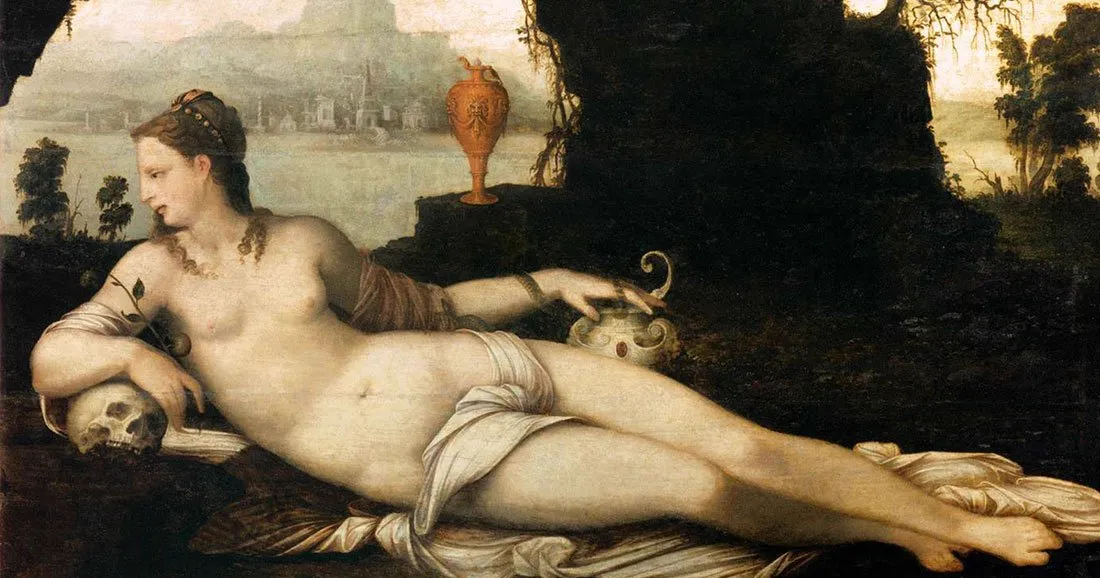
Pandora was sent to Epimetheus, Prometheus's brother — whose name means "he who thinks after the fact". Despite his brother's warnings never to accept a gift from Zeus, Epimetheus welcomed her. Zeus had entrusted Pandora with a great jar — often incorrectly called a "box" due to a mistranslation by Erasmus — with a strict prohibition against opening it.
Consumed by curiosity — a trait that Hermes had precisely instilled in her so that Zeus's revenge would be fulfilled — Pandora lifted the lid. In an instant, all the evils the jar contained escaped and spread throughout the world: death, old age, sickness, madness, war, famine, poverty. Terrified, Pandora closed the jar at the exact moment the last being was about to escape. It remained trapped at the bottom: Hope.
The Meaning of the Myth
The myth of Pandora is the Greek answer to a universal question: why do humans suffer? For Hesiod, the answer is clear — evils were introduced into the world by a woman, the unwitting instrument of divine revenge. Pandora's curiosity is not presented as a vice but as a programmed nature, a destiny she could not avoid.
Hope remaining in the jar is the most debated element of the myth. Is it a blessing — it remains available to humans — or an additional curse — it allows them to endure sufferings that would otherwise drive them to revolt? Hesiod leaves the question open, making it one of the richest texts in ancient literature.
In Saint Seiya
Hades SagaIn the Hades Saga, Pandora is one of the most complex characters of the arc. Her relationship with Hades and the god's armor — which functions as a jar containing devastating power — directly extends the symbolism of the myth: a vessel holding the world's most terrible evils.
Pandora's jar is paralleled with Hades' armor in the series: both are containers of infernal power that, once released, can no longer be controlled. Pandora in Saint Seiya embodies sacrifice and manipulation — a woman used by the gods as an instrument, exactly as in Hesiod's original myth.
Attributes


Evils released from the jar