Niobe
Tragic QueenGreek MythologyGreek Mythology · Queen of Thebes · Punished by Apollo & Artemis · Eternal weeper
The Queen of Thebes
Niobe was the wife of Amphion, king of Thebes — the legendary musician whose lyre had the power to move stones to build the city walls. Niobe was the daughter of Tantalus, the king who had dared to challenge the gods by serving them his own son as a feast — a lineage already marked by hubris.
Niobe and Amphion reigned happily over a prosperous city. Their union had produced fourteen children — seven sons and seven daughters — of uncommon beauty, strength, and talent. This offspring was Niobe's absolute pride, the source of her self-confidence and, ultimately, of her downfall.
Pride & Blasphemy
One day, while the women of Thebes were celebrating rites in honor of Leto — the goddess mother of Apollo and Artemis — Niobe interrupted the ceremonies and dared to compare herself to the goddess before the entire city. She declared that Leto had only two children, while she had fourteen — seven times more. She was more beautiful, more powerful, more fertile. She even ordered that honors be paid to her rather than to Leto.
This act of hubris — the excessive pride that leads a mortal to believe themselves equal to the gods — could not go unpunished. Leto, deeply wounded, called upon her two divine children for vengeance.
Divine Punishment
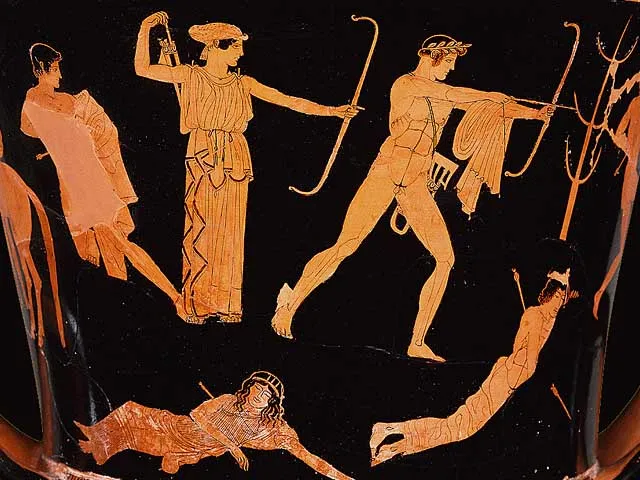
Apollo, armed with his silver bow, and Artemis, with her golden arrows, descended upon Thebes and, invisible, loosed their deadly shafts. One by one, Niobe's seven sons fell struck by sudden death. Niobe, frantic and broken, begged mercy for her daughters — but Artemis did not stop. The seven daughters collapsed in turn.
Faced with the horror of the scene, Niobe was turned into a statue of stone by the gods — but a statue that wept ceaselessly, inexhaustible tears. Transported to Mount Sipylus in Asia Minor, she continues to weep for her children there for eternity. The Ancients believed they could see in a rocky cliff on that mountain the face of the petrified queen, trickles of water running like tears down the rock.
In Saint Seiya
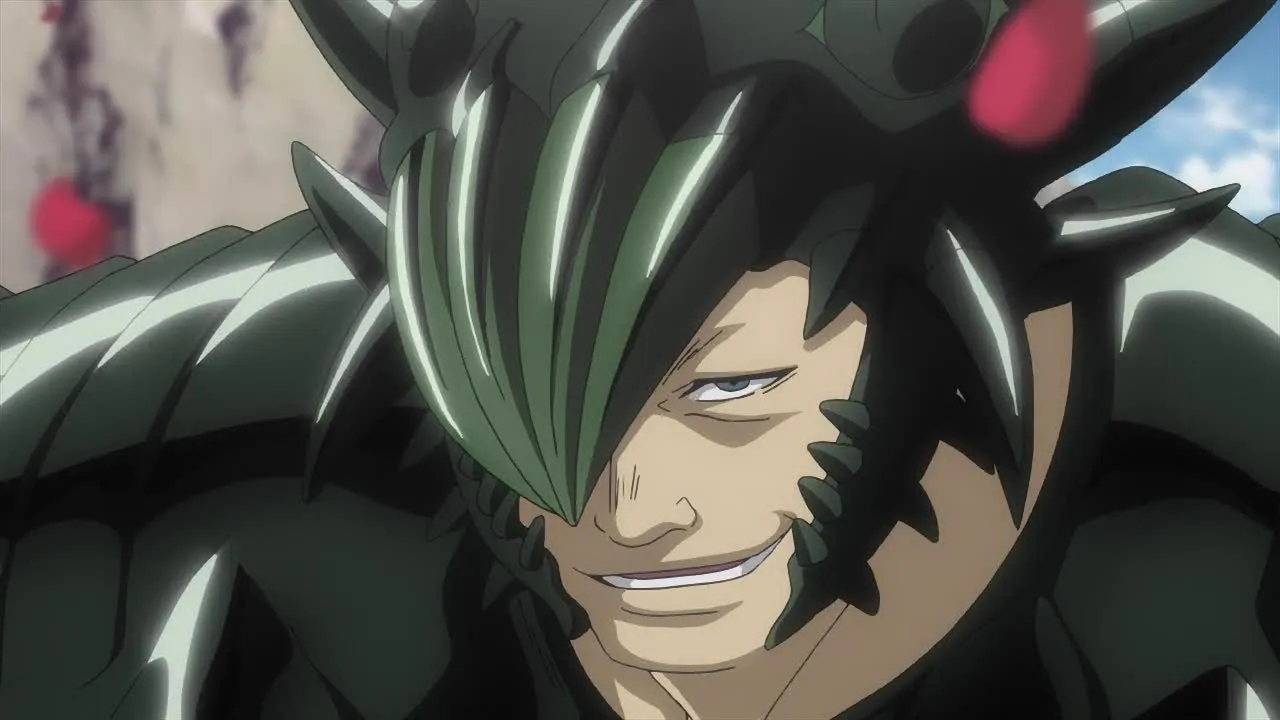
Theme of Tragic FateThe myth of Niobe has no direct counterpart in Saint Seiya, but its theme — the fall of a powerful being through excessive pride and the inextinguishable pain that results — resonates deeply in several arcs of the series. The Gemini Gold Saint, Saga, also embodies this duality between greatness and madness: a being of absolute power whose pride and inner corruption lead him to betray his own.
Like Niobe who believed herself superior to the gods, Saga — by proclaiming himself the equal of Hades — crosses the line separating the hero from the tyrant. The tragedy of Niobe is a universal lesson on hubris that Saint Seiya revisited regularly in its narrative arcs: no human power can rival the divine order without paying the price.
Attributes

Hubris — Excessive Pride