Harpies
Mythical CreatureGreek mythologyGreek mythology · Bird-Women · Spirits of Malevolent Winds
Origins & Description
The Harpies are the daughters of Thaumas — sea god of the wonders of the deep — and the Oceanid Electra. They number two or three depending on sources: Aello (Storm), Ocypete (Swift Wing), and Celaeno (the Dark One). Their sister Iris, goddess of the rainbow and messenger of the gods, is their luminous opposite.
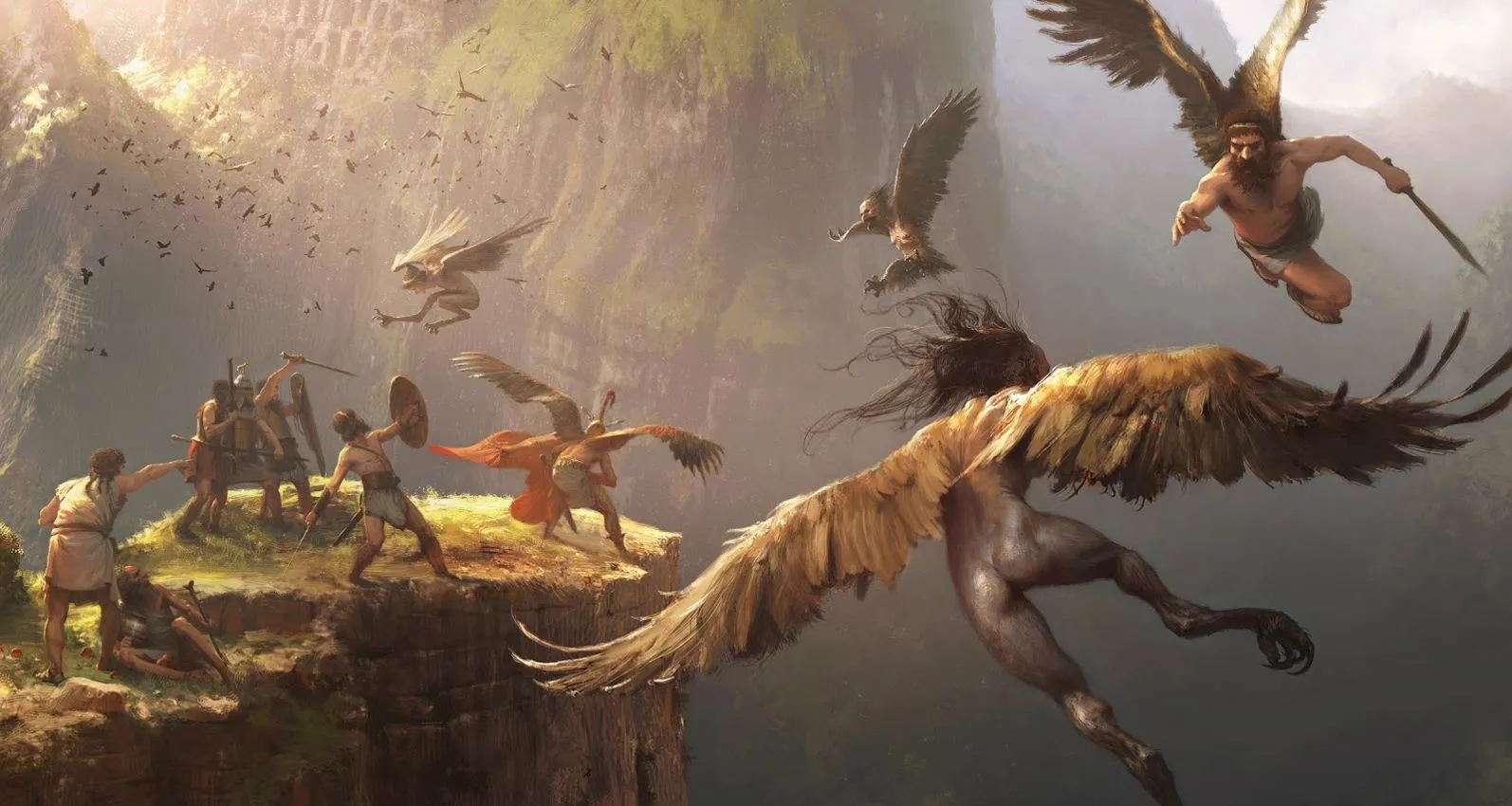
Their appearance is terrifying: a bird's body, great wings, sharp talons capable of seizing and tearing, and a woman's head with cadaverous pallor. They emit a fetid odor and leave a stench wherever they pass that corrupts food and spreads defilement. They are also called the Snatchers or the Hounds of Zeus — for they sometimes execute divine vengeance.
Phineus & the Argonauts
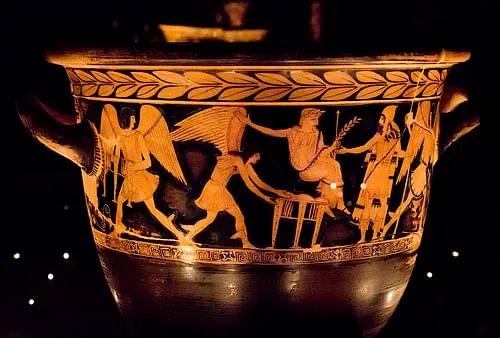
The most famous episode featuring the Harpies concerns the blind seer Phineus, king of Thrace. Phineus had the gift of prophecy but revealed the gods' secrets too freely, greatly angering Zeus. To punish him, Zeus took away his sight and sent the Harpies to systematically defile all his meals — snatching the food or covering it with their foul droppings the moment Phineus was about to eat.
When the Argonauts stopped in Thrace, the sons of Boreas — Zetes and Calais, themselves winged as sons of the north wind — pursued the Harpies to the Strophades islands. The goddess Iris then intervened to prevent her sisters from being killed, promising they would never again torment Phineus. In exchange for this information, Phineus revealed to the Argonauts how to pass through the Symplegades — the clashing rocks.
Other Roles & Legends
Before being transformed into bird-women by Demeter — furious that they had not prevented Persephone's abduction by Hades — the Harpies were the young goddess's companions. Their metamorphosis is a double punishment: losing their human form and being exiled to rocks near the Strait of Messina, condemned to terrorize sailors.
The Harpies symbolize malevolent winds and sudden storms that seize ships and men without warning. The Greek word harpazein — to seize, to snatch — is the origin of their name. They were also said to carry off children and take them to the Underworld to be tortured by the Erinyes.
In Saint Seiya
Wind SymbolismThe Harpies are closely linked to the wind — and in Saint Seiya, it is the Cygnus constellation that embodies this mastery of the air and icy winds. Hyoga, the Cygnus Bronze Saint, uses techniques based on cold and mastery of the cosmos linked to polar winds — a symbolic continuity with the Harpies, spirits of the winds.
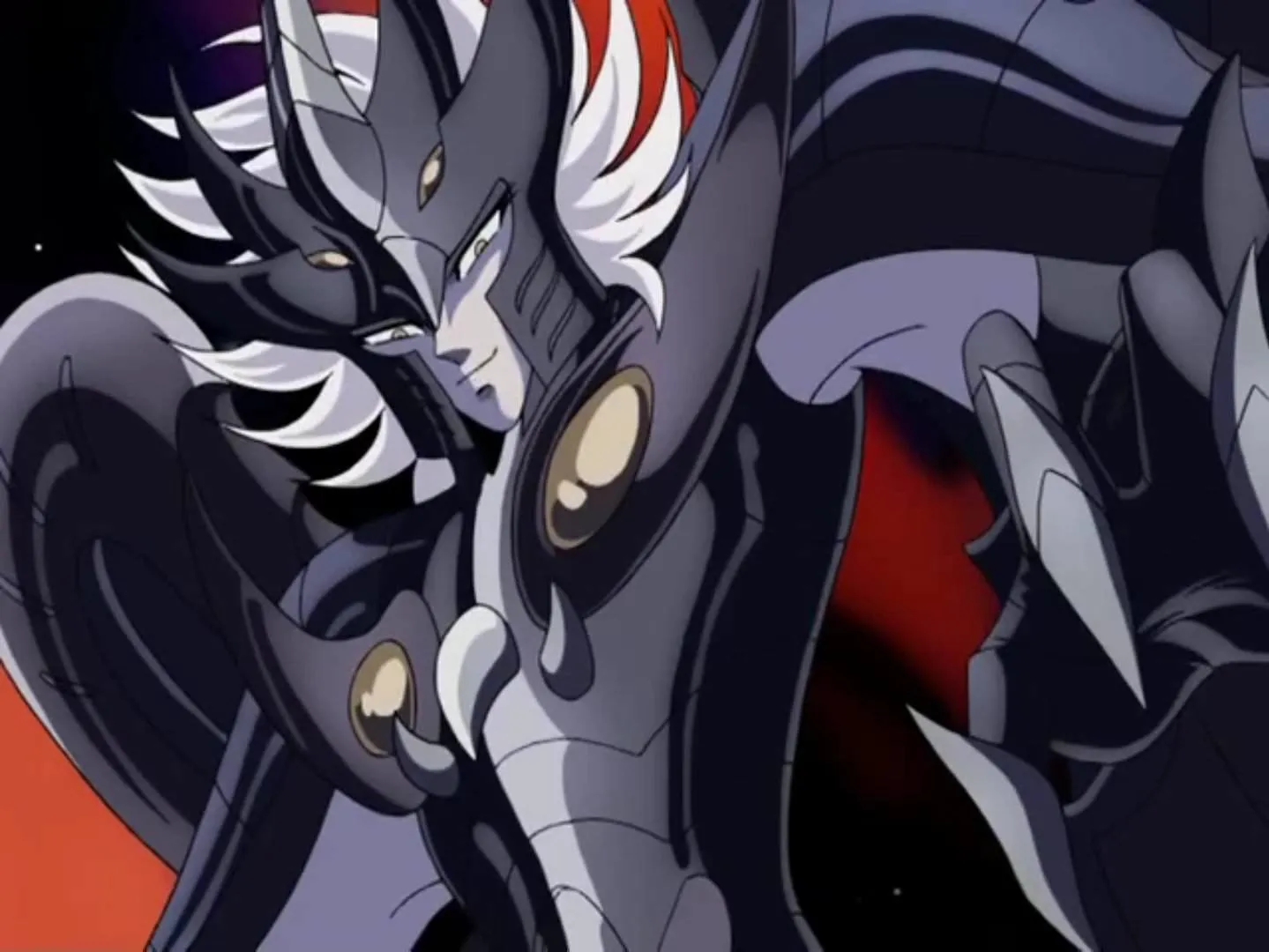
In Dante's Divine Comedy — a direct source of inspiration for the Hades saga — the Harpies inhabit the forest of suicides in the seventh circle of Hell, tearing the branches of these soul-trees that bleed and cry out. This terrifying image influenced the portrayal of infernal creatures in Saint Seiya. The character of Valentine in the anime also wears a costume inspired by the Harpies.
Attributes
The Three Harpies