Aeacus
Judge of the UnderworldGreek MythologyGreek Mythology · King of Aegina · Son of Zeus · Grandfather of Achilles
Origins & Reign
Aeacus is the son of Zeus and the nymph Aegina, daughter of the river god Asopus. Zeus, captivated by the young nymph, abducted her and brought her to the island that bears her name. There Aeacus was born and reigned. His justice and piety were so exemplary that Greeks called upon him to arbitrate their disputes — whether between mortals or in matters divine.
Aeacus was also the grandfather of the hero Achilles: through his son Peleus, he is the ancestor of the Aeacid line, one of the most illustrious in Greek mythology. His other son, Telamon, was one of Heracles' companions and the father of Ajax the Great.
The Plague & the Myrmidons
Aeacus's reign was marked by a terrible ordeal. Hera, jealous that her island bore the name of Zeus's rival, sent a devastating plague upon Aegina. Thousands of Myrmidons — Aeacus's people — died within days. The fields were covered with corpses, the waterways became polluted, famine set in.
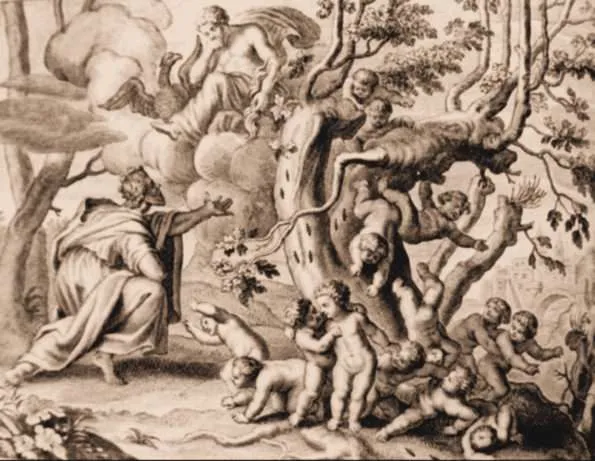
In his despair, Aeacus turned to Zeus and begged his father to act. While praying beneath a sacred oak — the tree of Zeus — he saw a column of ants climbing the trunk. He made a wish that his people might be as numerous as those ants. That night Zeus appeared to him in a dream, and the next day the ants transformed into human beings. Myrmidon means "ant" in Greek — those disciplined, tireless warriors who would later follow Achilles at Troy.
Judge at the Tribunal of the Underworld
After his death, Aeacus was chosen to sit at the Tribunal of the Underworld alongside Minos and Rhadamanthus. The three judges each had a geographical jurisdiction: Rhadamanthus judged the souls of Asia, Minos had the deciding vote in case of disagreement, and Aeacus was responsible for the souls of Europe.
The process was relentless: the soul arrived naked before the judges, stripped of all markers of wealth or power, and the judges examined the deeds of an entire lifetime with absolute rigor. Virtuous souls were sent to the Elysian Fields or the Isle of the Blessed; the guilty were sent to Tartarus to suffer eternal punishment.
In Saint Seiya
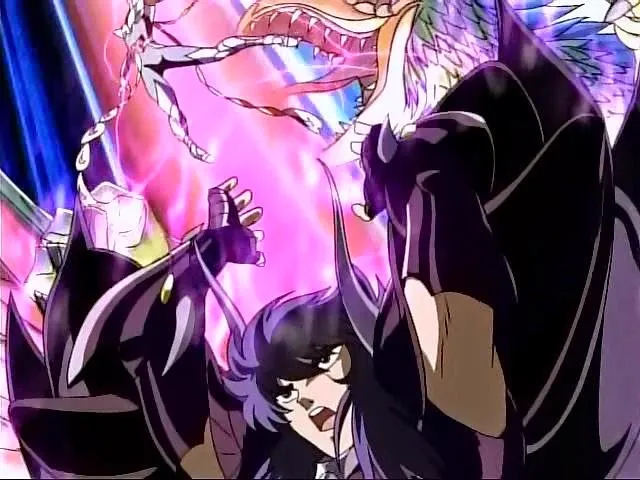
Hades SagaIn the Hades Saga, Aeacus is one of the three great judges of the Underworld, depicted as Specters in service to Hades. True to mythology, he embodies the implacable justice of the realm of the dead — the one who weighs the souls of the departed and pronounces their final sentence.
The choice of these three mythological figures as pillars of the saga reflects Kurumada's ambition: to anchor Saint Seiya in the most rigorous Greek cosmology. Minos, Rhadamanthus and Aeacus are not mere borrowed names — their roles in the series closely match their original function, paying tribute to the complex architecture of the Greek Underworld.
Attributes
The Three Judges of the Underworld