Dante & the Divine Comedy
Literature & MythologyGreek MythologyDante Alighieri · 14th century · Journey through the Afterlife
Dante's Journey
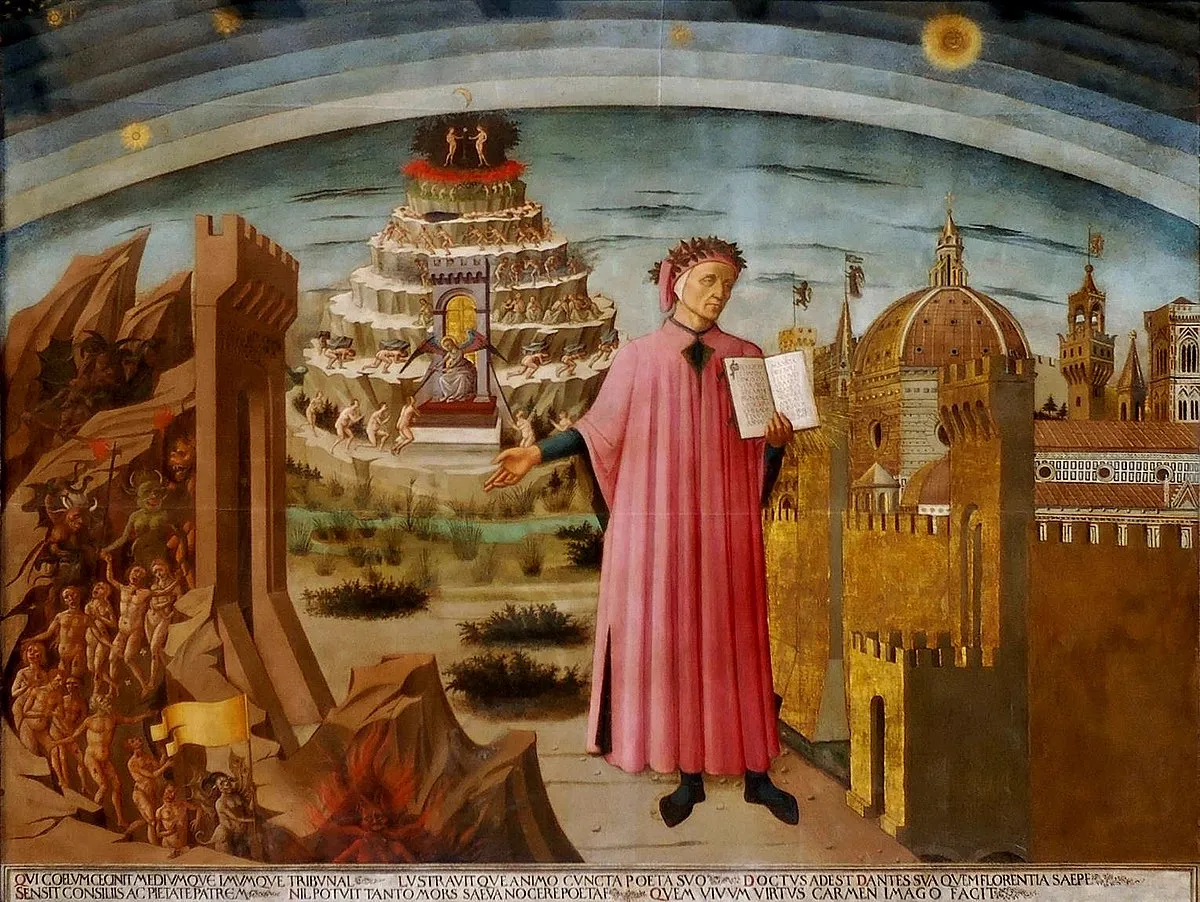
Dante Alighieri (1265-1321) was the Florentine poet who wrote the Divine Comedy, one of the most influential literary works of all time. In it he narrates an allegorical journey through the afterlife, guided first by the Latin poet Virgil — symbol of human reason — then by Beatrice, his idealised love, symbol of divine grace.
The journey begins in a dark forest, symbol of moral wandering. Dante descends beneath Jerusalem, where the Inferno opens — nine concentric circles bored into the Earth, each deeper than the last, housing condemned souls according to the gravity of their sins.
The Nine Circles of Hell
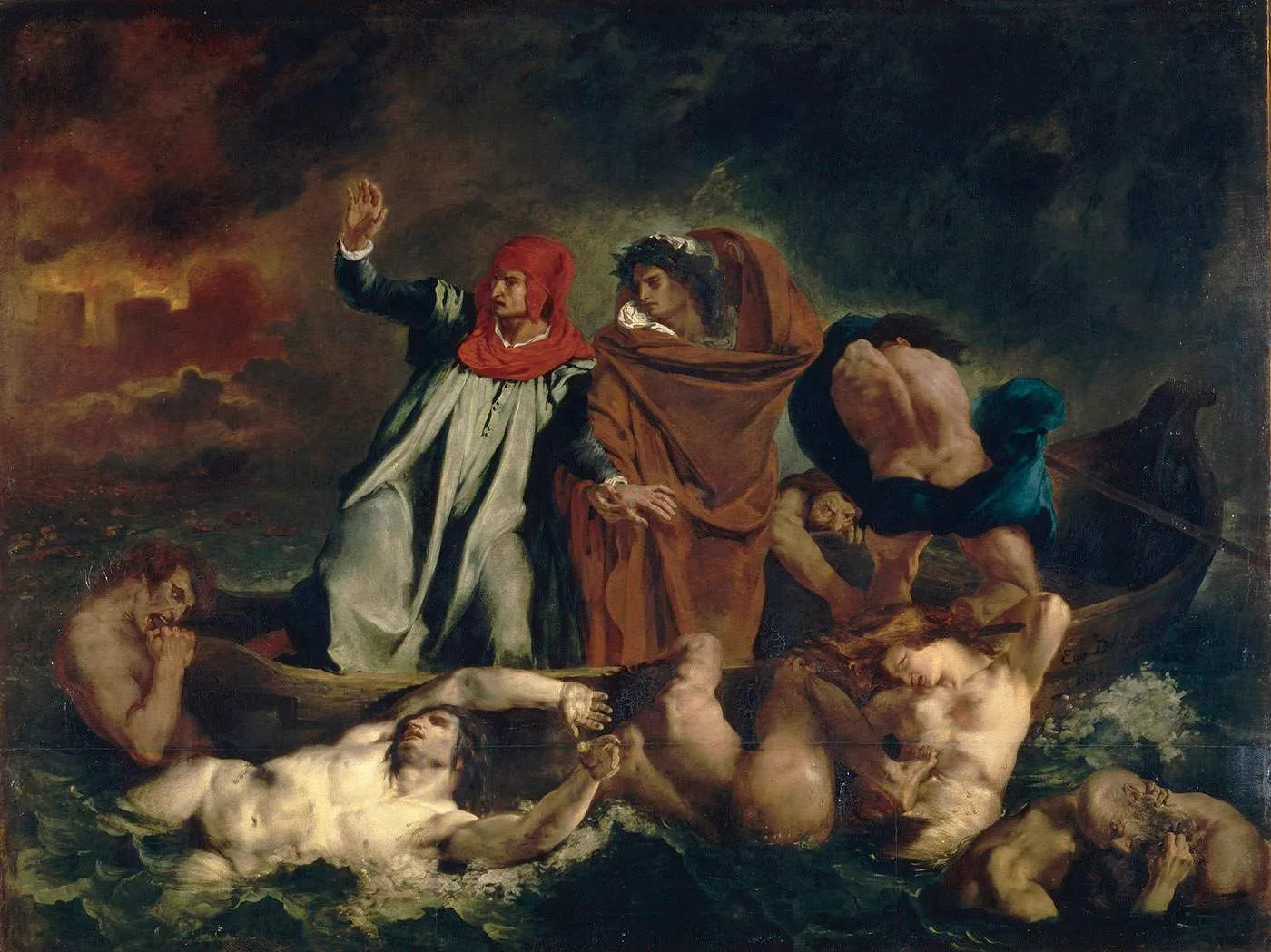
Charon, ferryman of souls, takes Dante and Virgil across the Styx. Each circle is guarded by a creature or figure from Greek mythology:
To leave Hell and reach Purgatory, Virgil must cling to the hair of Lucifer frozen in the ice, with Dante clinging to him, and both traverse the centre of the Earth before emerging in the southern hemisphere.
Purgatory & the Celestial Rose
Purgatory is a mountain at the antipodes of Jerusalem, organised into seven terraces corresponding to the seven deadly sins. The souls there expiate their faults and gradually rise toward Paradise. On the last cornices, Virgil — a being of reason without faith — can no longer accompany Dante. It is Beatrice who now guides him.
At the summit of Paradise, Dante beholds the Celestial Rose — a vast flower of light where blessed souls are arranged in circles according to their merit, and contemplate the presence of God. There the journey ends: Dante, purified, glimpses the divine vision that words can no longer express.
In Saint Seiya
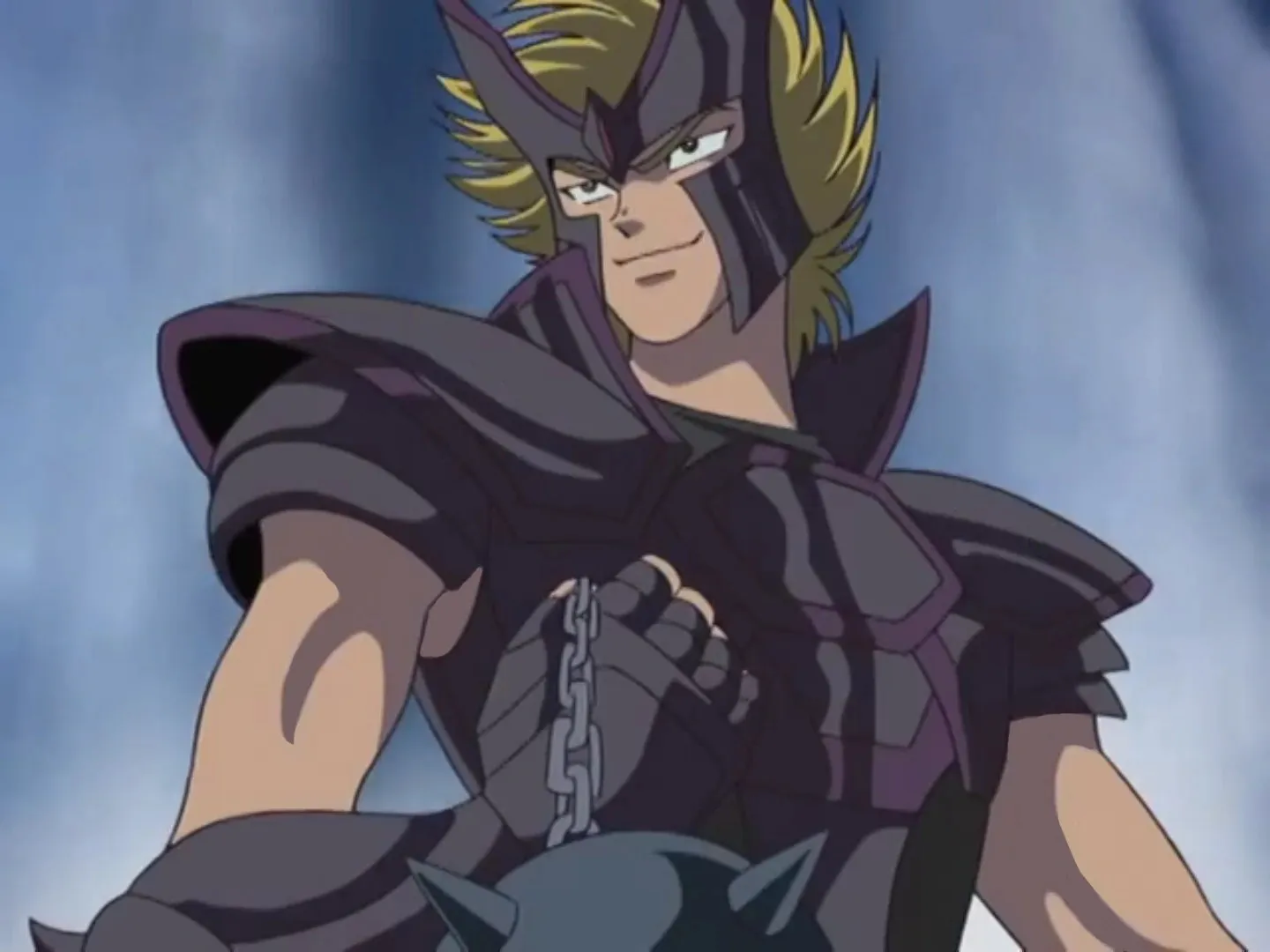
Silver SaintThe silver knight Dante takes his name directly from the Florentine poet. His armour is that of Cerberus — the guardian of the third circle of the Dantean Hell. This onomastic choice is typical of Kurumada: superimposing a medieval literary reference onto a Greek myth to enrich the character's symbolism.
Dante's Divine Comedy itself draws massively on Greek mythology: Minos judges the damned, Cerberus guards the third circle, the Harpies populate the seventh, the Centaurs watch over the violent. Dante Alighieri used exactly the same creatures as Kurumada in Saint Seiya — both works draw from the same mythological source.
Attributes
Mythical creatures present