Centaurs
Mythical CreatureGreek mythologyGreek mythology · Half-man half-horse · Born of Ixion's hubris
Origins & Birth
The Centaurs are born of a divine transgression. Ixion, king of the Lapiths, was the first mortal to shed the blood of a kinsman — a crime so grave that no god would consent to purify him. Zeus, out of clemency, invited him to Olympus. But Ixion, driven by mad desire, attempted to seduce Hera. Zeus trapped him by creating a double of his wife, a cloud in the shape of a woman called Nephele. From their monstrous union was born Centaurus, father of the centaurs, who then mated with the mares of Mount Pelion.
The centaurs that descended from him inherited the dual nature of their lineage: half man, half horse. Dwelling in the forests and mountains of Thessaly, they were known for their brutality, drunkenness and inability to respect the laws of men.
Chiron — The Benevolent Sage
Among all the centaurs, Chiron stands as an absolute exception. Son not of Ixion but of Cronus and the nymph Philyra, he is immortal by nature and possesses a character radically opposite to his kin. Wise, just, learned, he masters medicine, music, hunting and prophecy.
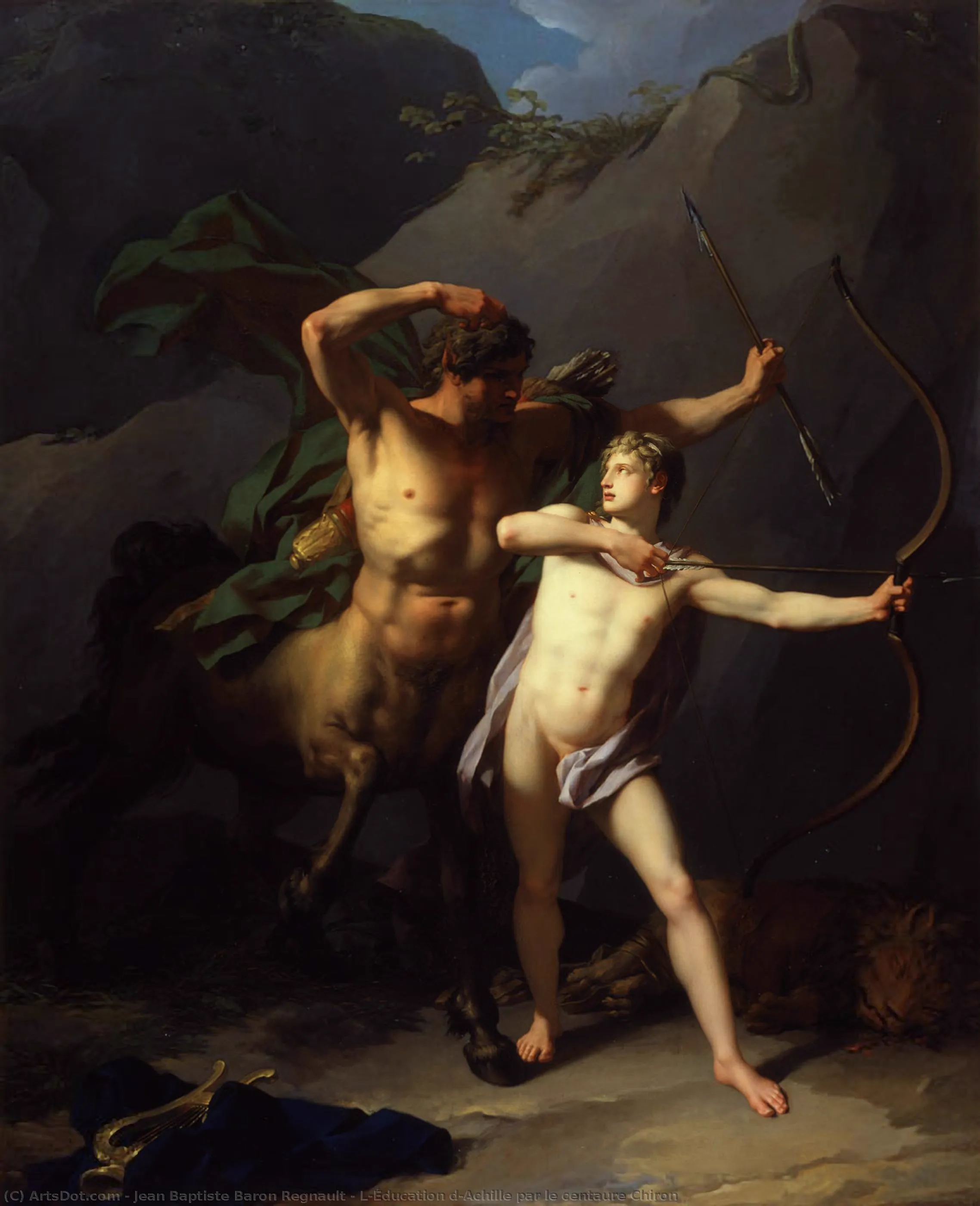
Chiron was the tutor of the greatest Greek heroes: Achilles, Jason, Asclepius — god of medicine — and Heracles. It was precisely Heracles who, by accident, wounded him with an arrow poisoned with the Hydra's blood. Immortal yet suffering an irremediable pain, Chiron chose to cede his immortality to Prometheus and died in peace. Zeus placed him among the stars.
The Centauromachy
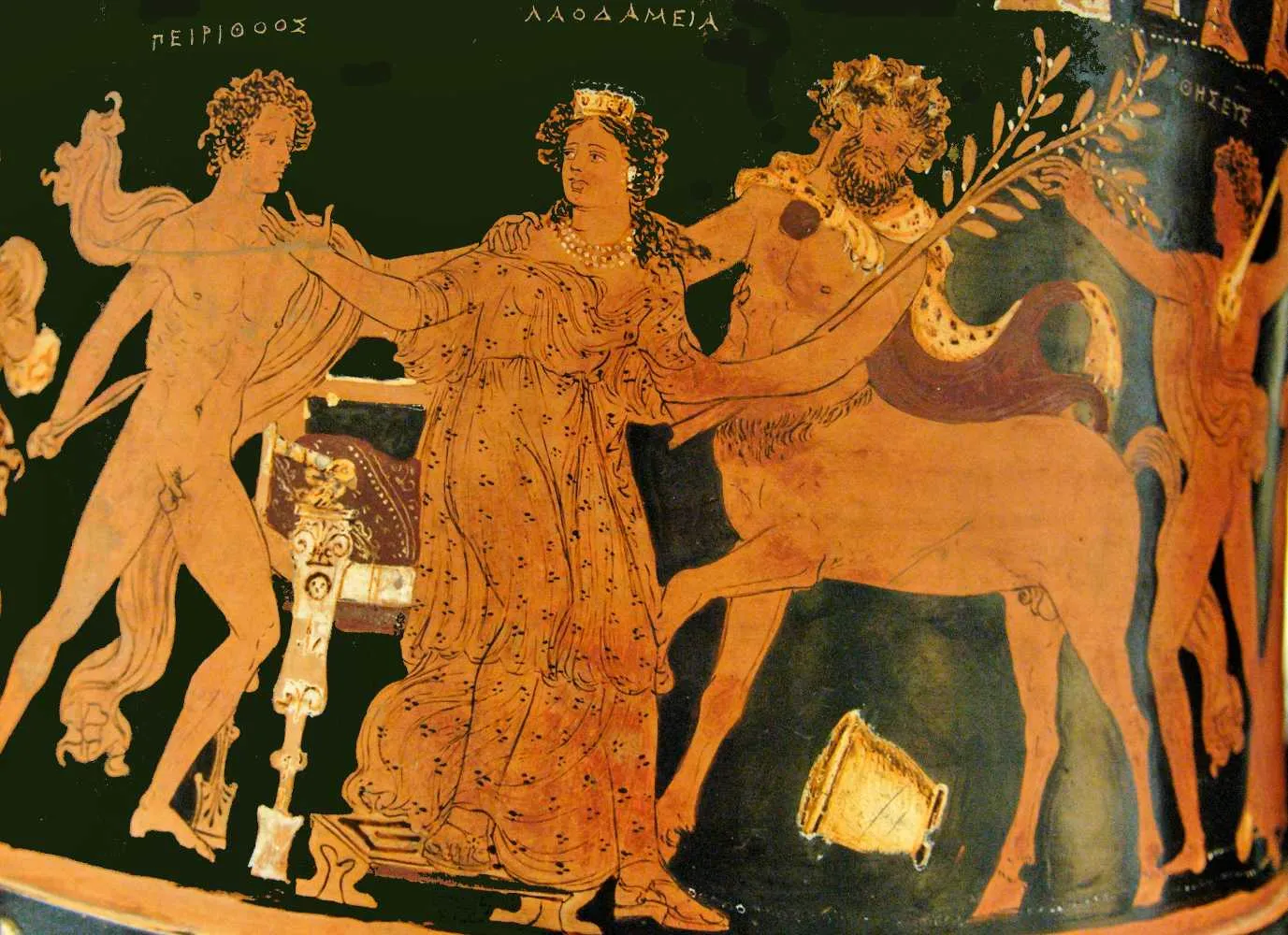
The most famous myth associated with the centaurs is the Centauromachy — the battle between the centaurs and the Lapiths. At the wedding of Pirithous, king of the Lapiths, the centaurs were invited. At the sight of wine, these creatures of no restraint attempted to abduct the Lapith women and the bride herself. A terrible battle broke out, in which Theseus, friend of the king, took part. The Lapiths ultimately prevailed and exiled the centaurs from Mount Pelion.
This episode became a universal symbol of the triumph of civilisation over barbarism. It adorned the metopes of the Parthenon, the pediments at Olympia, and was taken up by all Greek sculptors as an allegory of the victory of reason over animal instincts.
In Saint Seiya
Gold Saint of SagittariusThe constellation of Sagittarius is directly linked to the centaurs: it represents Chiron himself, placed among the stars by Zeus after his death. In Saint Seiya, the Gold Saint of Sagittarius pays homage to this archer centaur — wise, protective, in the service of the gods.
Aioros of Sagittarius perfectly embodies Chiron's legacy: righteous, noble, capable of sacrificing his own life to protect the innocent. His golden arrow — the Sagittarius Gold Arrow — is a direct reference to the centaur's legendary bow. Like Chiron who shaped heroes, Aioros played a decisive role in Seiya's training and protection, long before the war with Athena began.
Attributes


Heroes trained by Chiron