Cancer
Zodiac ConstellationOlympusGreek mythology · Hera's Crab · Guardian of passages
Hera's Crab & the Battle against the Hydra
The myth of Cancer is one of the most understated in the zodiac, yet one of the richest in meaning. During the second labour of Heracles, the hero must face the Lernaean Hydra — an aquatic monster whose heads keep growing back. The goddess Hera, who has hated Heracles since his birth, sends a crab to distract him during the fight: the creature pinches the hero's foot to throw him off.
Its mission fails: Heracles crushes the crab underfoot without even noticing, and ultimately defeats the Hydra with the help of his nephew Iolaus. But Hera, moved by her little crab's devotion, raises it among the stars as a reward for its unwavering loyalty — even in failure. Thus the constellation of Cancer is born: a monument to absolute obedience toward a deity.
Symbolism & The Passage of Souls
In Greek mythology, Cancer holds a particular cosmic position: the constellation marks the Gate of Cancer, one of two celestial gates through which souls descend from the heavens to incarnate in mortal bodies — the other being Capricorn, through which they ascend after death. Cancer is thus fundamentally linked to birth, death and passage between worlds.
The crab itself embodies fascinating paradoxes: it moves sideways, never in a straight line, a symbol of discretion and indirect approach. Its protective shell contrasts with the fragility of what it shelters. In some traditions, the crab is guardian of the underworld waters — the rivers that separate the land of the living from the kingdom of the dead.
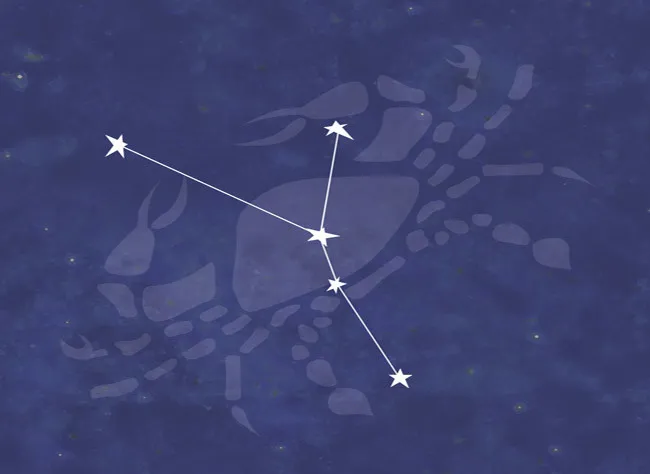
Cancer is one of the faintest constellations in the zodiac — its stars are pale and hard to spot. Yet it is famous for harbouring the Beehive Cluster or Praesepe (M44), an open cluster of some three hundred stars visible to the naked eye on clear nights, like a diffuse cloud at the heart of the constellation.
Loyalty Beyond Death
What sets the Cancer myth apart in the zodiac is the total absence of moral ambiguity. The crab seeks no glory, negotiates no help — it obeys, attacks, is crushed, and yet Hera commemorates it. It is the figure of the faithful servant whose worth is not measured by success but by commitment.
In Egyptian mythology, this symbolism appears in the goddess Khepri — the solar scarab — whose form echoes the arthropod. The scarab rolls its dung ball as the sun rolls across the sky: a cycle of death and rebirth, an obligatory passage for every soul.
In Saint Seiya
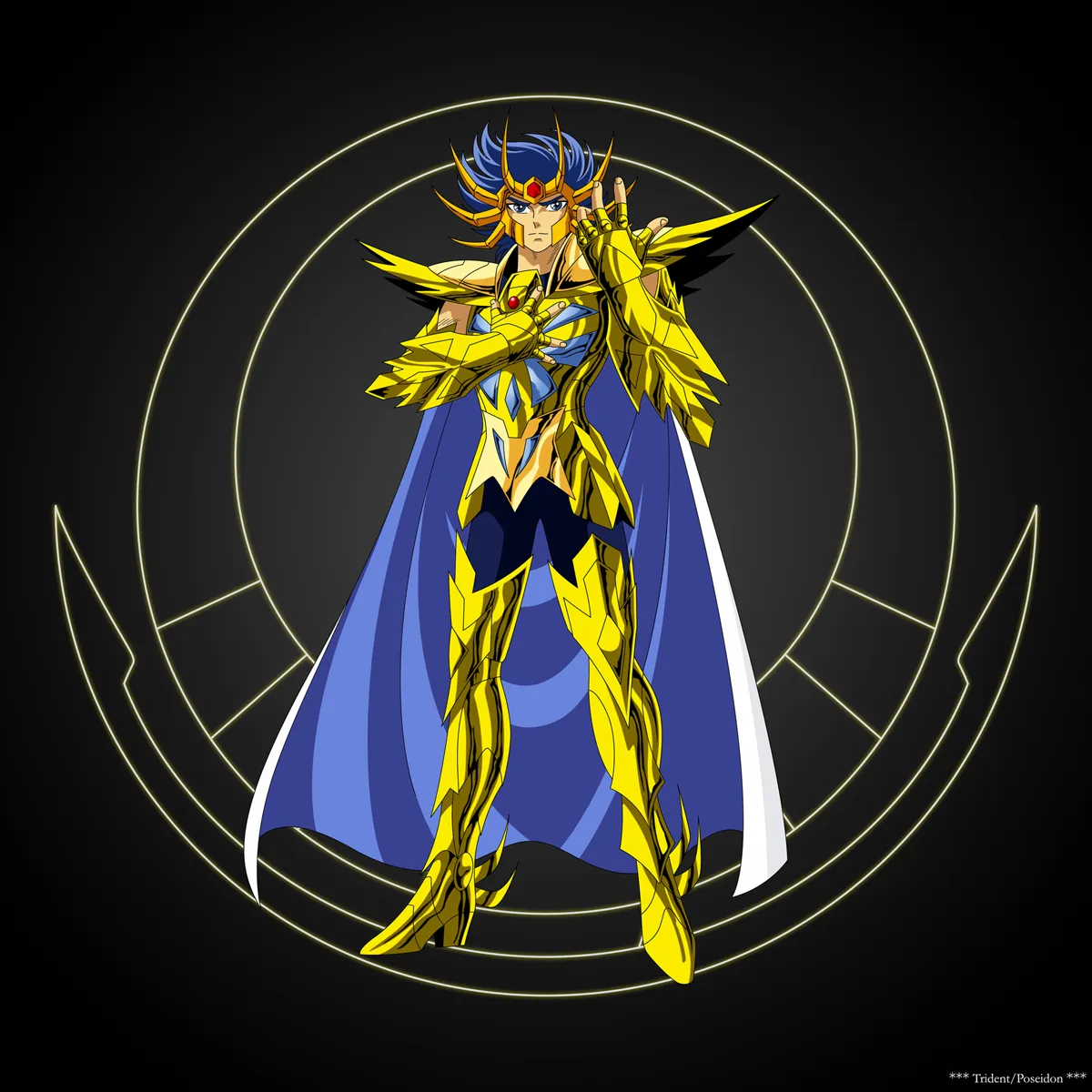
Gold Saint of CancerKurumada's choice for Cancer is particularly dark and coherent: Death Mask, the Gold Saint of Cancer, is the guardian of the boundary between the living and the dead. His ultimate power — sending souls directly to the Underworld — directly echoes the mythological role of the constellation as the Gate of Cancer, the passage of souls toward the afterlife.
Death Mask's technique Sekishiki Meikaiha is literally a portal to the realm of the dead — a corridor to the Underworld that absorbed souls cannot traverse in reverse. Like the crab of the myth, he is the guardian of a one-way passage, the threshold between two worlds.
His nickname 'Death Mask' evokes the funerary masks of ancient civilisations — the mask of Tutankhamun, Greek death masks — objects placed upon the deceased for their journey to the afterlife. The Cancer House is a door to the dead, faithful in every way to the mythology of the constellation.
Attributes
Mythic connections