Libra
Zodiac ConstellationOlympusGreek mythology · Divine justice · Cosmic balance
Themis, Dike & Astraea — The Goddesses of Justice
The Libra constellation is unique in the zodiac: it is the only one to represent an inanimate object rather than a living being. And that object — the two-pan scale — is the instrument of divine justice, the attribute of several Greek goddesses.
Themis is the Titaness of divine law and cosmic order. Zeus's second wife, she presides over natural laws and divine assemblies. It is she who summons the gods to Olympus, guardian of sacred decorum. Her daughter Dike — Justice personified — holds the scales in one hand and the sword in the other, weighing the deeds of mortals with absolute impartiality.
Astraea, daughter of Zeus and Eos, is the goddess of innocence and purity. During the Golden Age, she lived among men. But as humanity sank into violence and vice — the Silver Age, the Bronze Age — the gods left the Earth one by one. Astraea was the last to go, refusing to abandon mankind. She flew up to the stars and became the neighboring constellation of Virgo — holding in her hands the scales of Justice, which became the constellation of Libra.
The Weighing of Souls & Cosmic Balance
In Greek tradition, Zeus himself uses scales during great battles to weigh the fate of heroes. During the Trojan War, he weighs the fates of Achilles and Hector: Hector's pan sinks toward the Underworld — the signal of his imminent death. This practice — kērostasia, or the weighing of souls — is one of the most solemn divine acts in mythology.
Libra is also intimately linked to the autumnal equinox: when the Sun enters Libra, day and night are strictly equal — nature itself weighs its hours of light and darkness on a perfect scale. This is the moment of absolute equilibrium, the pivot of the year between growth and decline.
The main stars are Zubenelgenubi ('the southern claw') and Zubeneschamali ('the northern claw'), two Arabic names that reveal the ancient story: Libra was once considered the claws of the neighboring Scorpion, torn from the animal to create a separate sign dedicated to justice.
Libra Across Civilizations
The symbolism of the scales transcends cultural boundaries. In ancient Egypt, it is the weighing of the heart before Osiris that determines the fate of the dead: the deceased's heart is placed on one pan, the feather of Ma'at — symbol of absolute truth — on the other. A heart heavier than the feather is devoured by Ammit, the chimera, and the soul annihilated. A heart as light as a feather opens the gates of Aaru — the Field of Reeds, the Egyptian paradise.
In ancient Rome, the goddess Iustitia bears the scales and the sword — an image that the Western legal tradition perpetuates to this day in courtrooms around the world, a reminder that our entire system of law descends directly from this celestial myth.
In Saint Seiya
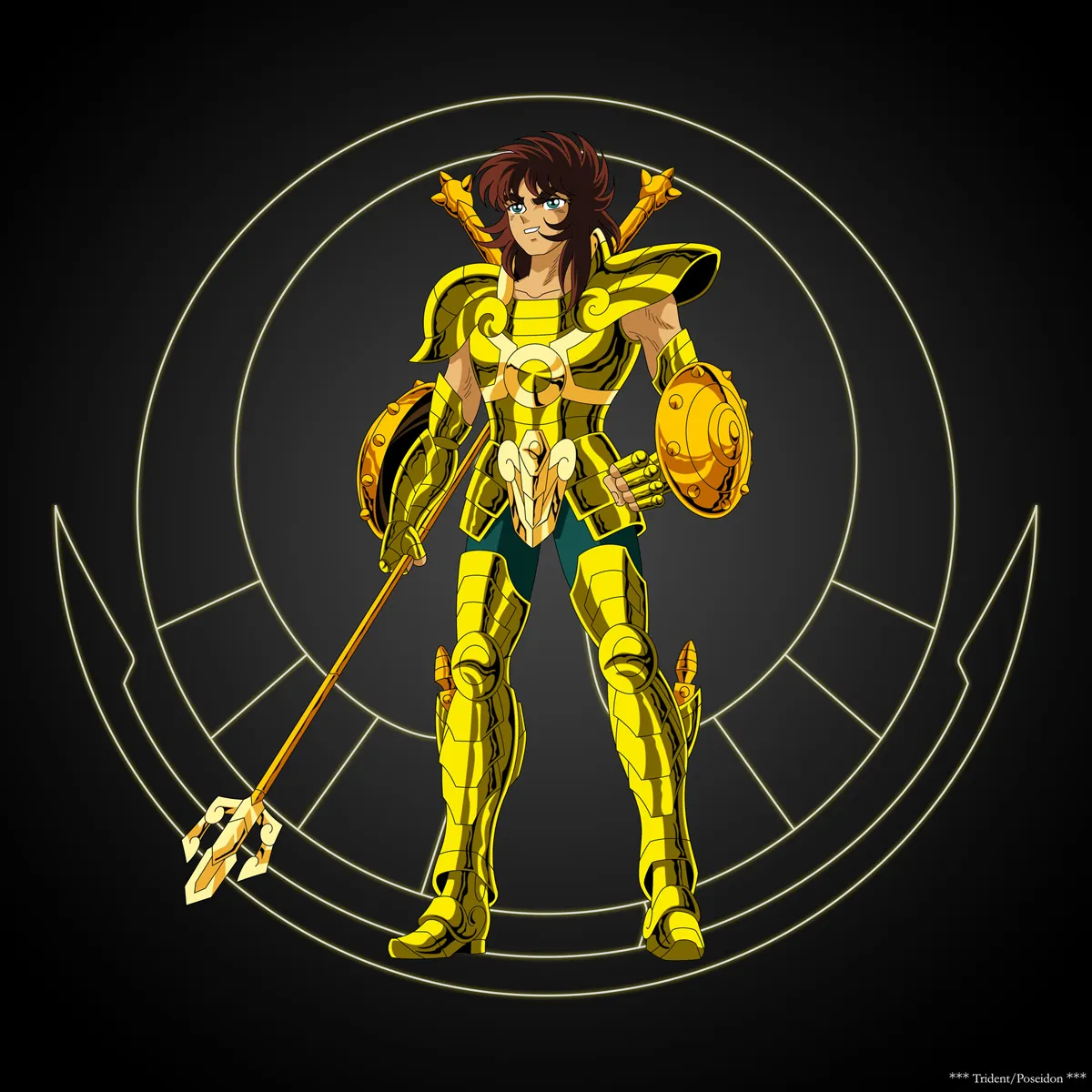
Gold Knight of LibraThe Libra cloth is the only Zodiac armor without an assigned wearer at the Sanctuary's belt. Kurumada made it an armor available to all Bronze Knights — a neutral cloth of Justice, belonging not to a clan but to all those who fight for a just cause. It is a perfect reflection of the symbolism of Themis and Dike: justice takes no sides, it balances.
Dohko of Libra is nonetheless one of the most meaningful characters in the manga. Master of Shiryu, he has guarded the banks of the sacred river of Lushan for two hundred and thirty years — like Astraea who refused to leave mankind despite its decline. His extraordinary longevity is the price of his guardian mission.
His technique Rozan Shōryūha — the Rising Dragon — and his 108 Dragon Secrets make him a master of measured weight and restrained power. Like the divine scales that only tip when fate is decided, Dohko acts only at the precise moment cosmic balance demands it.
Attributes


Figures of Justice