Asgard
Realm of the AesirNorse MythologyNorse mythology · Divine city · Home of Odin & the Warrior Gods
The Celestial City of the Aesir
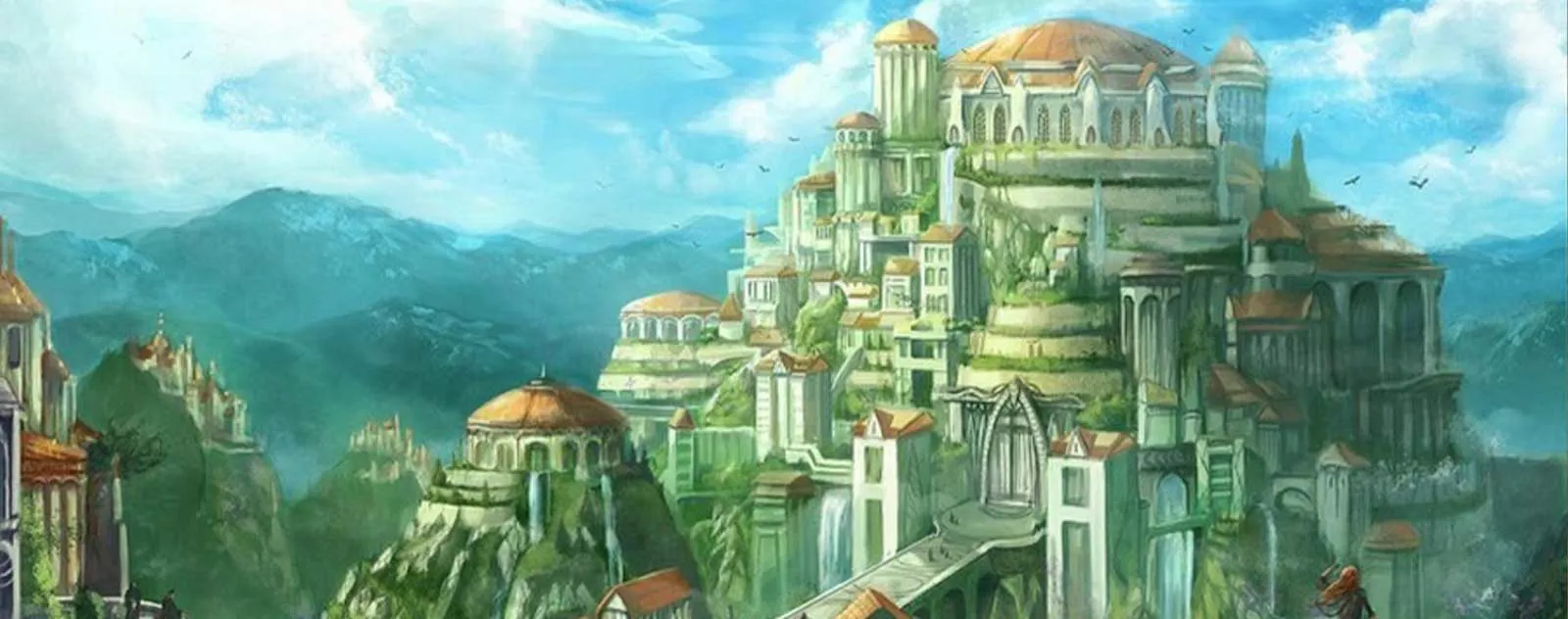
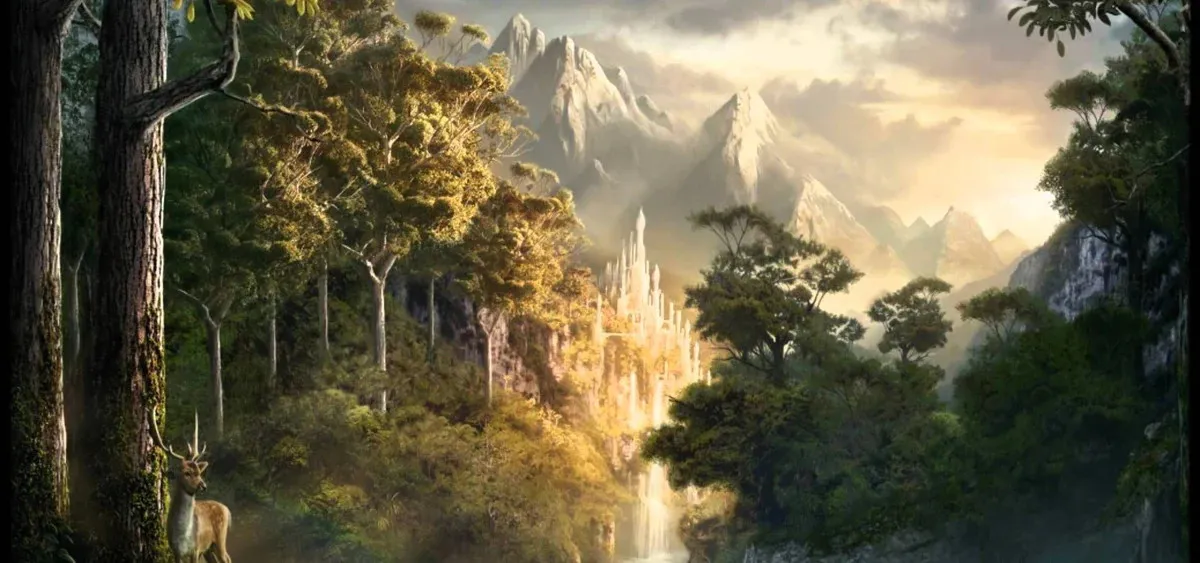
Asgard is the divine realm of the Aesir — the principal family of Norse gods, ruled by Odin. Located in one of the nine worlds of Norse cosmology, Asgard stands atop the cosmic tree Yggdrasil — the World Ash — whose branches carry the nine realms of existence, from roots plunged into the misty Niflheim to the luminous heights where the gods dwell. Asgard's geography is precisely described in the texts: it is an impregnable fortress, surrounded by thick walls, its gates defended by immortal guardians.
At the heart of Asgard stands Gladsheim — the Abode of Joy — a great hall where the gods hold their assemblies. There Odin sits on his throne Hlidskjalf, from which his gaze sweeps across all nine worlds. Nearby lies Valhalla — the Hall of Slain Warriors — with five hundred and forty doors and a roof made of shields and spears. Frigg's palace, Odin's wife, is called Fensalir — the Fen Halls. Each deity has their own domain within Asgard or the adjacent realms.
The Construction of Asgard
Asgard's walls were built under particularly dramatic circumstances. An unknown giant — Hrimthurs — came to the gods and offered to build an invincible fortress in exchange for the sun, the moon, and the goddess Freyja. The gods, who desperately needed protection but refused the exorbitant price, agreed after Loki suggested a rigged contract: the giant had to work alone, only at night, and finish within a single winter.
But construction advanced at a terrifying pace, aided by the supernatural horse Svadilfari who hauled the stones. With three days to go, the fortress was nearly complete. The gods, seized by panic, forced Loki to intervene. He transformed into a mare and seduced the giant's horse during the final three nights, making it impossible to finish on time. The giant, discovering the trick, flew into a murderous rage and was killed by Thor. This story illustrates how Norse gods govern as much by cunning as by force.
The Bifrost & the Nine Worlds
Asgard is connected to Midgard — the world of men — by the Bifrost, the Rainbow Bridge. This shimmering, many-colored bridge is guarded by Heimdall, the Watchman of the gods, capable of seeing in darkness and hearing grass grow. The Bifrost can bear the weight of gods and virtuous men, but it will burn at Ragnarök when the fire giants cross it. On the other side, the river Ifing separates Asgard from the land of Giants — Jötunheim — and never freezes, even in deepest winter.
Asgard is separate from the eight other cosmic realms of Norse mythology. Among them: Midgard (world of men), Jötunheim (giants), Niflheim (icy mists), Muspelheim (fire), Alfheim (light elves), Svartalfheim (dark elves), Helheim (realm of the common dead), and Vanaheim (the Vanir, fertility gods). Yggdrasil connects these worlds, and the fate of each is inscribed in its roots and in the runes carved by the Norns — the Norse Fates.
In Saint Seiya
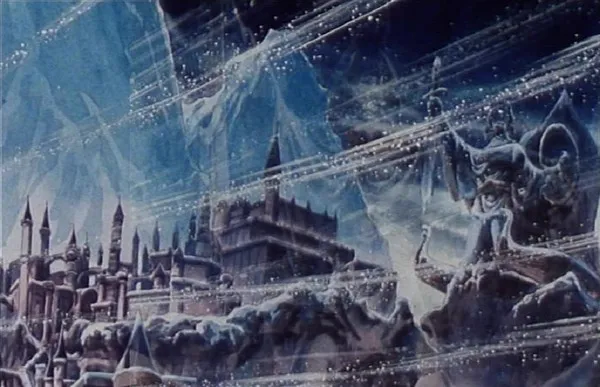
Asgard SagaIn the Asgard Saga of Saint Seiya, the Norse realm is transposed to the frozen lands of northern Scandinavia. It is an autonomous kingdom, protected by the seven God Warriors of Asgard — the human Aesir — who wear sacred armors called Odinrobes, Nordic equivalents of the Zodiac Armors. The high priestess Hilda, earthly incarnation of Odin's will, governs this kingdom in the god's name.
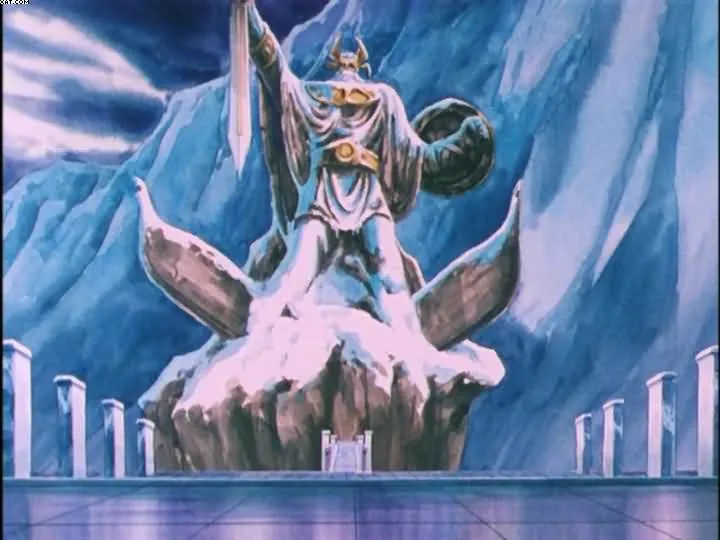
The correspondence with mythology is precise and deliberate: Odin's temple with its giant statue recalls descriptions of Nordic temples dedicated to the Allfather. The seven God Warriors represent the divine champions — the Einherjar of Valhalla — ready to die for their god. The saga's central conflict — the destruction of cosmic seals that could engulf the world in ice — directly evokes the mythology of Ragnarök and Fimbulwinter, the endless winter preceding the end of the Norse world. Kurumada thus weaves the deepest themes of Norse cosmology into his narrative.
Attributes
The Nine Worlds