Andromeda
Ethiopian PrincessGreek MythologyGreek mythology · Daughter of Cepheus and Cassiopeia · Northern constellation
The Wrath of Poseidon
Andromeda is the daughter of King Cepheus of Ethiopia and Queen Cassiopeia. Her mother makes the reckless boast that she — and her daughter — surpass the Nereids in beauty, the sea nymphs who serve Poseidon. The offense cannot go unpunished: the Nereids bring their grievance to the god of the Sea, who sends the terrible monster Cetus to ravage the kingdom's shores.
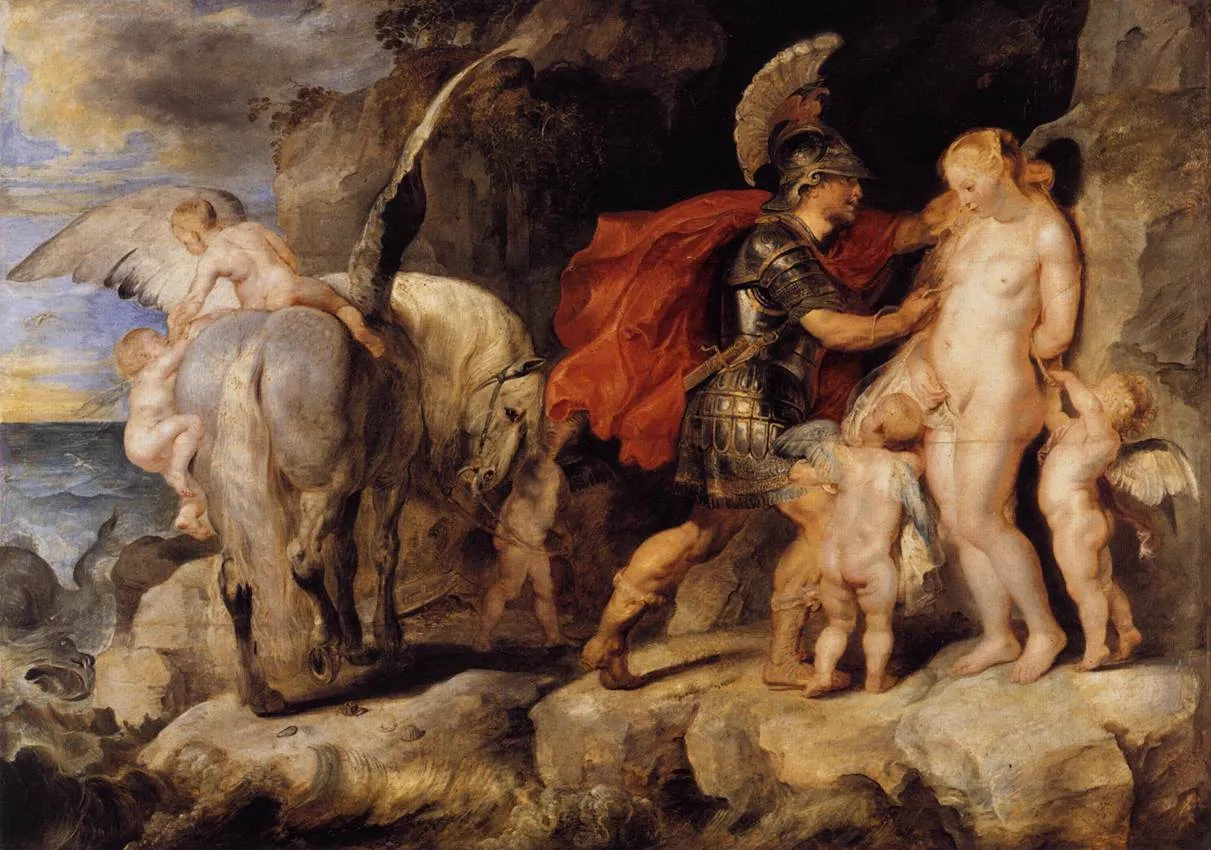
In desperation, Cepheus consults the oracle of Ammon. The answer is unequivocal: to appease Poseidon and end the devastation, Andromeda must be delivered to the monster. The princess is chained to a rock on the shore — an expiatory sacrifice offered to the raging waves. Cepheus and Cassiopeia promise their daughter's hand, and their kingdom, to whoever could free her.
Perseus & the Rescue
Perseus, returning from his expedition against Medusa, flies over the shore on the winged horse Pegasus and spots Andromeda in chains. Struck by her beauty, he negotiates with Cepheus and rushes to the princess's aid. He uses the severed head of Medusa — whose gaze turns anyone who looks at it to stone — and transforms the monster Cetus into rock as it rises from the waves.
The promise is kept: Perseus marries Andromeda. But at the wedding feast, her uncle Phineus, to whom she had been betrothed, attempts to take her back by force. Perseus brandishes the head of Medusa once more and turns Phineus and his followers to stone. Andromeda and Perseus together form the lineage of the Perseids, from which Heracles is descended.
The Constellation
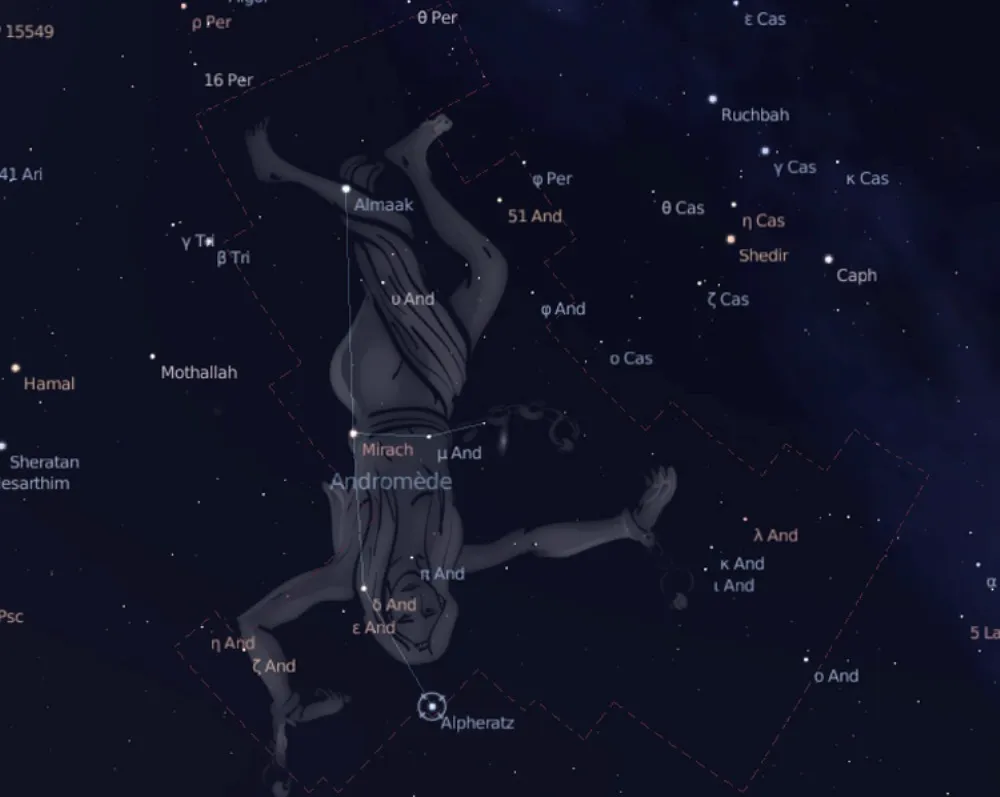
Upon her death, Andromeda was placed by Athena among the stars, near Cassiopeia, Cepheus, and Perseus — the whole family reunited for eternity in the northern sky. The Andromeda constellation is one of the 88 modern official constellations: it lies south of Cassiopeia, west of Perseus, and north of Pegasus.
The constellation contains the famous Andromeda Galaxy (M31), the closest galaxy to the Milky Way, visible to the naked eye. With nearly 300 billion stars, M31 is the very symbol of immensity and grandeur — much like the nebula chain that bears this name in Saint Seiya.
In Saint Seiya
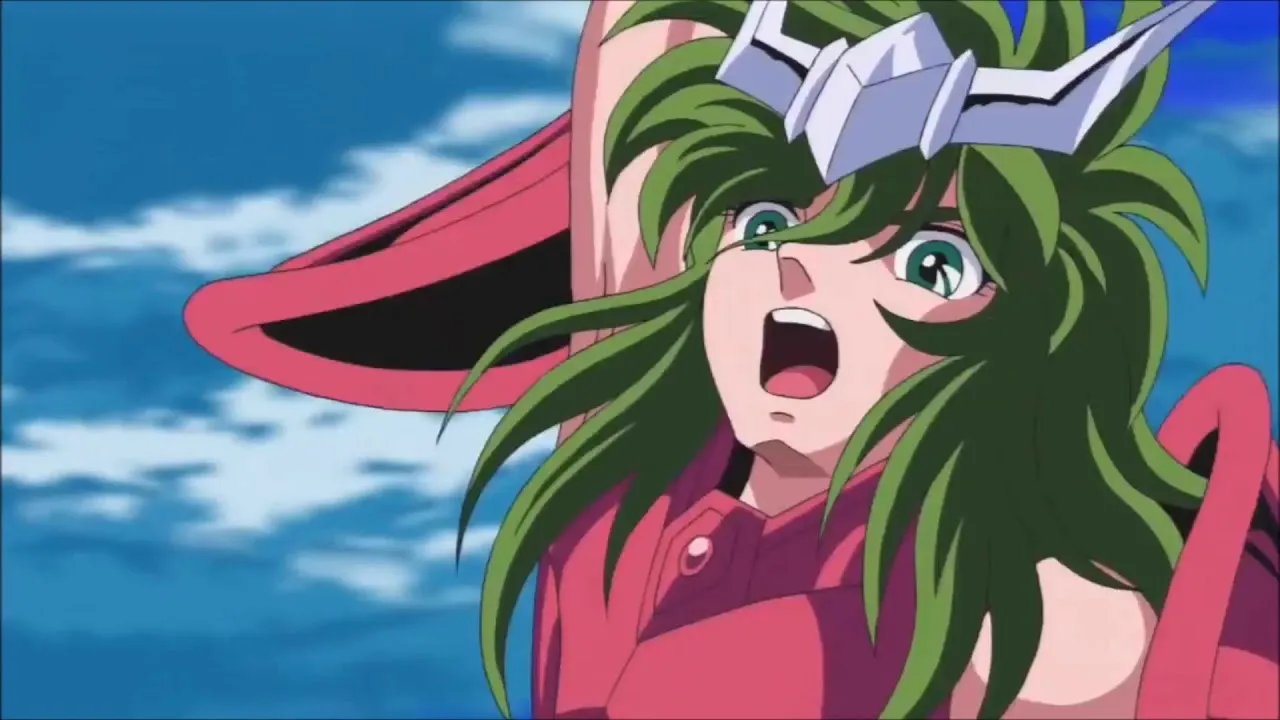
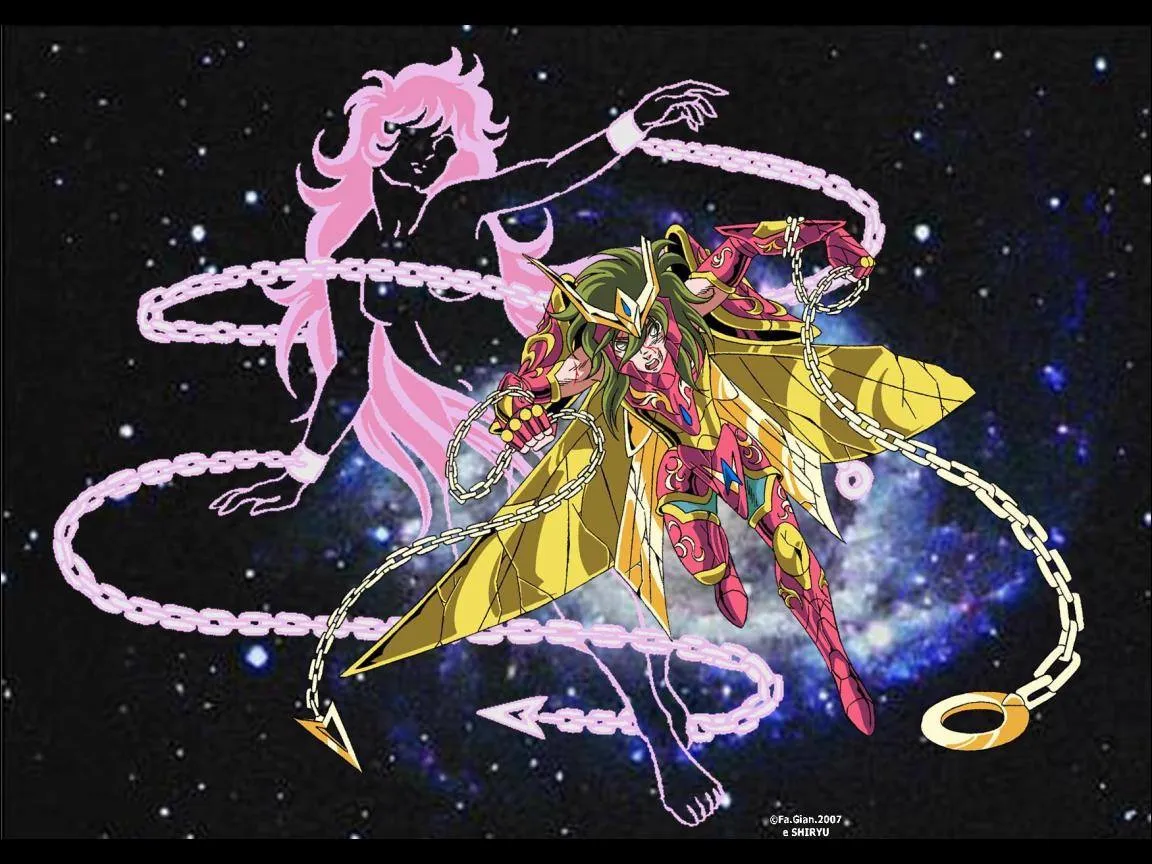
Bronze KnightShun of Andromeda is one of the five main Bronze Knights. His armor bears the name of the Ethiopian princess, and his primary weapon — the Nebula Chain — evokes the chains that bound Andromeda to the rock before Perseus's intervention. The rings of Andromeda are not mere fetters: they are a nearly impenetrable defensive barrier that closes around the opponent just as fate once enveloped the princess.
The myth also illuminates Shun's character. Andromeda was saved by Perseus, her external protector — just as Shun is frequently rescued or protected by his older brother Ikki of Phoenix. This fraternal solidarity, a cornerstone of their relationship, reproduces the dynamic of the myth: a pure soul preserved by the strength of another.
Paradoxically, Shun's cosmos is of devastating power, and the Andromeda cloth — according to the manga's legend — should never have belonged to him: it was meant for a warrior with a killer's heart. Shun, however, fights against his own violent nature, just as Andromeda struggled against a fate she had not chosen.
Attributes
Related characters