Artemis
Goddess of the HuntOlympusGreek Mythology · Olympian Deity · Moon, Nature & Chastity
Origins & Birth
Artemis is the daughter of Zeus and the Titaness Leto. Her birth is linked to the persecution by Hera, who, jealous of her husband, forbids Leto from giving birth on solid ground. It is on the floating island of Delos that Leto finally finds refuge, and it is there that Artemis is born first, immediately helping her mother bring her twin brother Apollo into the world.
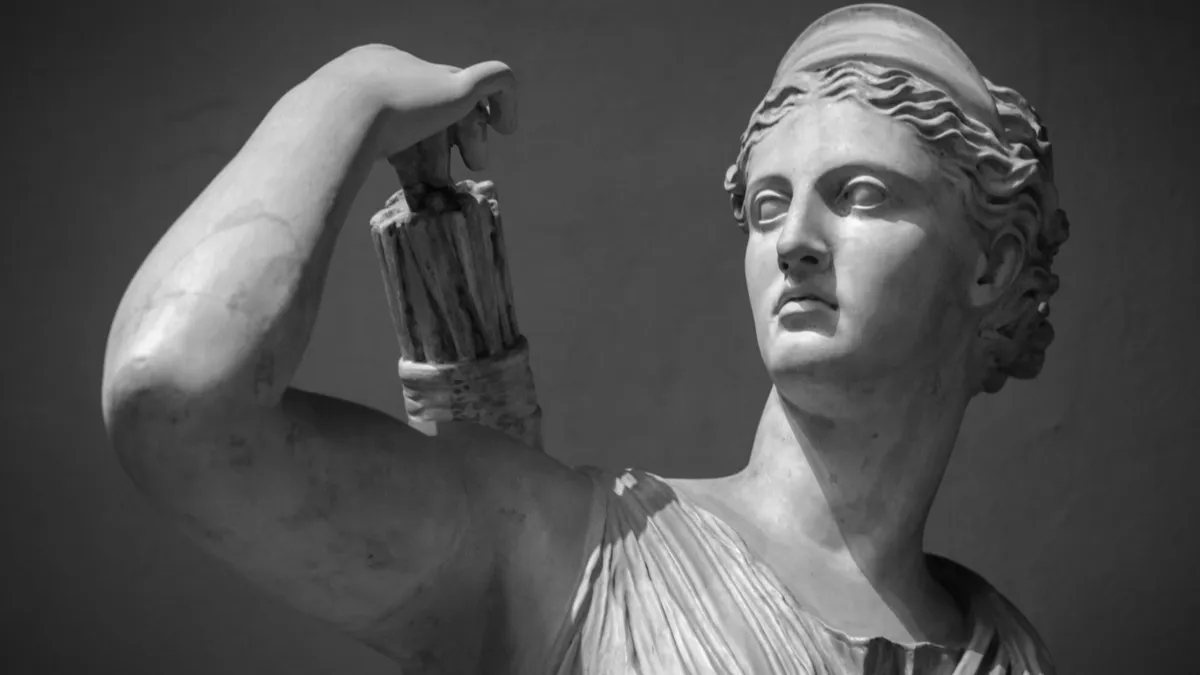
From childhood, Artemis asks her father Zeus to grant her eternal chastity, a silver quiver and arrows, and the freedom to roam the forests. Zeus, moved, grants her even more: sovereignty over all mountains and the title of guardian of roads and harbors. She becomes the protector of young girls and women in childbirth, paradoxically a virgin goddess and patron of midwifery.
Vengeance & Legends
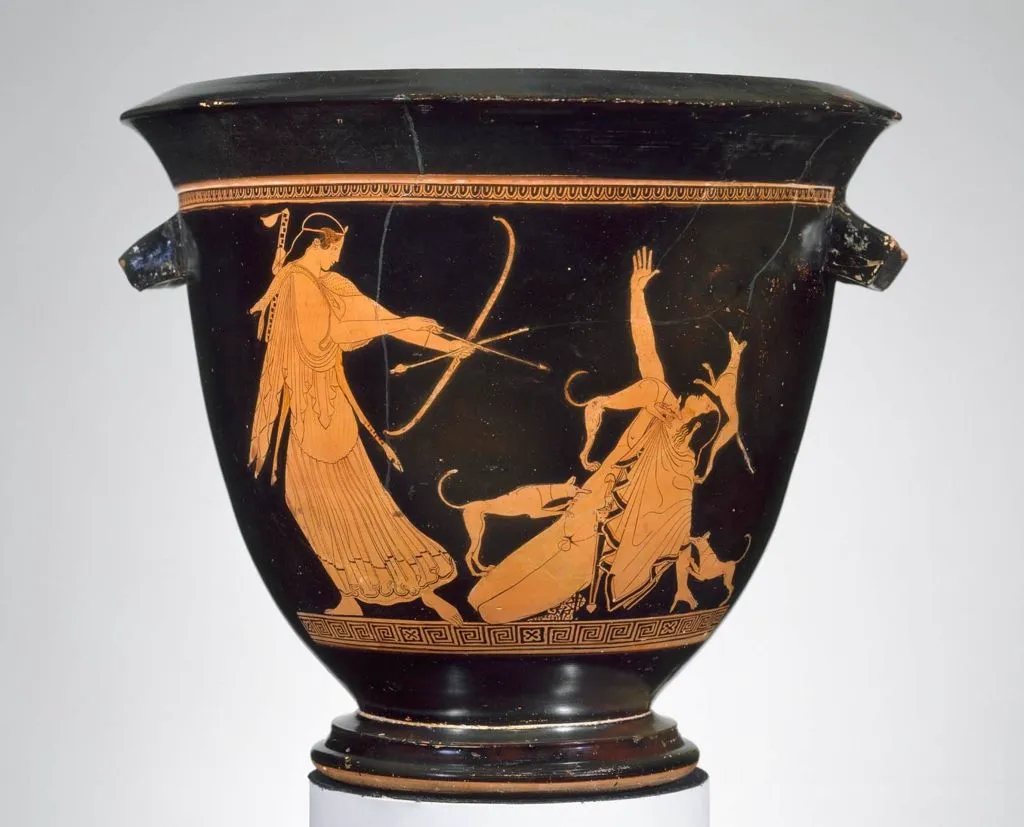
Artemis is known for her implacable wrath toward those who violate her chastity or offend her mother Leto. The hunter Actaeon pays the price: having spotted her bathing naked in a spring, he is transformed into a stag by the enraged goddess, before being devoured by his own hunting dogs. Orion, her hunting companion, also perishes — depending on the version, killed by her or by a scorpion sent at her request.
The goddess also intervenes in the myth of Niobe, a queen who boasts of having more children than Leto. Artemis and Apollo punish her by shooting all her sons and daughters with their bows. She also participates in the Calydonian Boar Hunt, where the huntress Atalanta, her protégée, strikes the first blow. These legends illustrate Artemis's duality: benevolent protector of the innocent, inexorable avenger of offenses.
Cult, Moon & Symbols
The Temple of Artemis at Ephesus, the Artemision, was one of the Seven Wonders of the Ancient World. A major pilgrimage center, it housed a colossal statue of the goddess in a very different form from the Olympian huntress: an eastern deity with multiple breasts, symbol of fertility and fecundity. This dualism illustrates the richness of Artemis's cult, which absorbed older and more diverse religious traditions.
Artemis is closely associated with the Moon — she is sometimes identified with Selene, the moon goddess, and Hecate, the goddess of magic. Her main symbols are the silver bow, the crescent moon, and the deer. A fierce virgin, she embodies wild and untamed nature, female independence, and the boundary between the civilized world and the wild.
In Saint Seiya
Film — Warriors of the Final Holy BattleArtemis appears in the fourth Saint Seiya film, Warriors of the Final Holy Battle (天界篇序奏, 1994). She is presented as a goddess of cold, distant beauty, determined to seize the body of Saori / Athena to establish her dominion over Earth. She commands her own divine warriors, the Angels, celestial servants clad in luminous armors.
In this unique confrontation between two Olympian deities, Artemis represents a particularly formidable threat as she acts from Heaven itself — a domain inaccessible to ordinary Saints. Her ambition reveals the latent rivalry between the gods of Olympus, and the Bronze Saints must transcend their limits to face a divine power in her own kingdom.
Attributes

Companions & Animals